


- Afhalen na 1 uur in een winkel met voorraad
- Gratis thuislevering in België vanaf € 30
- Ruim aanbod met 7 miljoen producten
- Afhalen na 1 uur in een winkel met voorraad
- Gratis thuislevering in België vanaf € 30
- Ruim aanbod met 7 miljoen producten





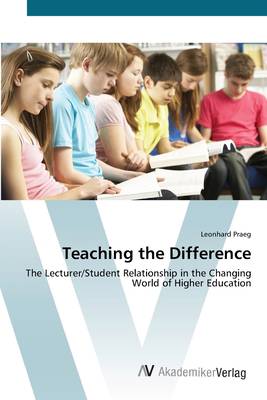
Teaching the Difference
The Lecturer/Student Relationship in the Changing World of Higher Education
Leonhard Praeg
Paperback | Engels
€ 68,95
+ 137 punten
Omschrijving
Revision with unchanged content. The global massification of higher education and the increasing commodi-fication of knowledge compel us to fundamentally rethink, not only the iden-tity of the contemporary university, but also the student/lecturer relationship. How do we conceive this relationship at a time marked by globalisation and the relative decline of the nation-state? Historically, teaching and research derived their meaning from the intimate connection between the university and the nation-state project. The decline of the latter qua imagined commu-nity has radical implications for those who work and study at university. This study focuses specifically on the consequences of these changes for the authority of lecturers and the ethical parameters of their relationship with students. The analysis suggests, firstly, that a deconstructive pedagogy may enable lecturers to re-appropriate the idea of education towards justice (even at a time marked by the declining importance of the nation-state as embodi-ment of such a society) and secondly, that the pre-modern trope of master/ apprentice may be a useful way of re-thinking authority in a way that is wholly immanent to the learning encounter itself. The book is addressed to lecturers in higher education with an interest in the philosophy of education.
Specificaties
Betrokkenen
- Auteur(s):
- Uitgeverij:
Inhoud
- Aantal bladzijden:
- 132
- Taal:
- Engels
Eigenschappen
- Productcode (EAN):
- 9783639423037
- Verschijningsdatum:
- 5/06/2012
- Uitvoering:
- Paperback
- Formaat:
- Trade paperback (VS)
- Afmetingen:
- 152 mm x 229 mm
- Gewicht:
- 204 g


Alleen bij Standaard Boekhandel
+ 137 punten op je klantenkaart van Standaard Boekhandel
CADEAU


Beoordelingen
We publiceren alleen reviews die voldoen aan de voorwaarden voor reviews. Bekijk onze voorwaarden voor reviews.