


- Afhalen na 1 uur in een winkel met voorraad
- Gratis thuislevering in België vanaf € 30
- Ruim aanbod met 7 miljoen producten
- Afhalen na 1 uur in een winkel met voorraad
- Gratis thuislevering in België vanaf € 30
- Ruim aanbod met 7 miljoen producten





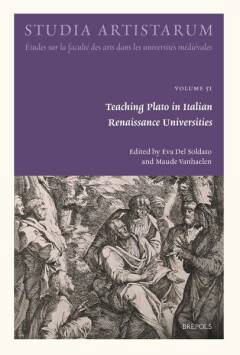
Teaching Plato in Italian Renaissance Universities
Eva Del Soldato
€ 74,20
+ 148 punten
Omschrijving
During the Renaissance, the Arts curriculum in universities was based almost exclusively on the teaching of Aristotle. With the revival of Plato, however, professors of philosophy started to deviate from the official syllabus and teach Plato's dialogues. This collection of essays offers the first comprehensive overview of Platonic teaching in Italian Renaissance universities, from the establishment of a Platonic professorship at the university of Florence-Pisa in the late 15th century to the introduction of Platonic teaching in the schools and universities of Bologna, Padua, Venice, Pavia and Milan in the 16th and 17th centuries. The essays draw from new evidence found in manuscripts and archival material to explore how university professors adapted the format of Plato's dialogues to suit their audience and defended the idea that Plato could be accommodated to university teaching. They provide significant and fundamental insight into how Platonism spread during the 16th and 17th centuries and how a new interpretation of Plato emerged, distinct from the Neoplatonic tradition revived by Marsilio Ficino.
Specificaties
Betrokkenen
- Auteur(s):
- Uitgeverij:
Inhoud
- Aantal bladzijden:
- 176
- Taal:
- Engels
- Reeks:
- Reeksnummer:
- nr. 51
Eigenschappen
- Productcode (EAN):
- 9782503607856
- Verschijningsdatum:
- 31/05/2024
- Uitvoering:
- Hardcover
- Formaat:
- Genaaid
- Gewicht:
- 1723 g


Alleen bij Standaard Boekhandel
+ 148 punten op je klantenkaart van Standaard Boekhandel
Cadeau

AANGERADEN


Beoordelingen
We publiceren alleen reviews die voldoen aan de voorwaarden voor reviews. Bekijk onze voorwaarden voor reviews.