



Je cadeautjes zeker op tijd in huis hebben voor de feestdagen? Kom langs in onze winkels en vind het perfecte geschenk!
- Afhalen na 1 uur in een winkel met voorraad
- Gratis thuislevering in België vanaf € 30
- Ruim aanbod met 7 miljoen producten
Je cadeautjes zeker op tijd in huis hebben voor de feestdagen? Kom langs in onze winkels en vind het perfecte geschenk!
- Afhalen na 1 uur in een winkel met voorraad
- Gratis thuislevering in België vanaf € 30
- Ruim aanbod met 7 miljoen producten





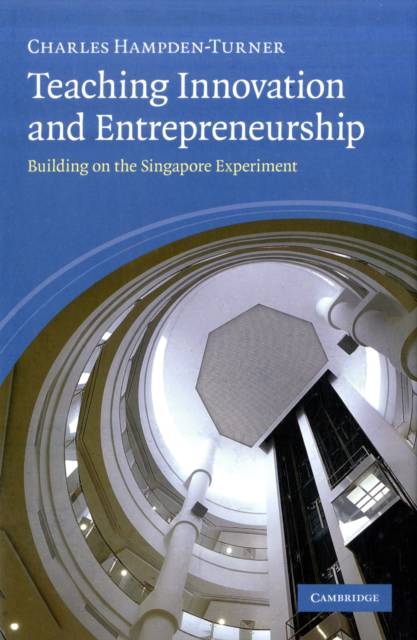
Teaching Innovation and Entrepreneurship
Building on the Singapore Experiment
Charles Hampden-Turner
Hardcover | Engels
€ 87,95
+ 175 punten
Omschrijving
Is it possible to teach someone to be an entrepreneur? Is innovation something that can be assessed and taught in a classroom? Teaching Innovation and Entrepreneurship answers these and other questions by focusing on a teaching experiment in Singapore at Nanyang Technological University, wherein classes of English-speaking Singaporeans and Mandarin-speaking students from the People's Republic of China were subjected to an 'entrepreneurial eco-system'. Extending from the west coast of the USA to Singapore and Shanghai, this programme subjects students to a wide range of activities, including a four-month business simulation game where teams of students select their favourite inventions and pitch them to real venture capitalists with the inventors present. Drawing on the lessons learned from this highly successful experiment, the book argues that not only is it possible to describe the innovative process, we can also teach it, measure it, evaluate it and model it.
Specificaties
Betrokkenen
- Auteur(s):
- Uitgeverij:
Inhoud
- Aantal bladzijden:
- 244
- Taal:
- Engels
Eigenschappen
- Productcode (EAN):
- 9780521760706
- Verschijningsdatum:
- 29/10/2009
- Uitvoering:
- Hardcover
- Formaat:
- Genaaid
- Afmetingen:
- 157 mm x 229 mm
- Gewicht:
- 521 g


Alleen bij Standaard Boekhandel
+ 175 punten op je klantenkaart van Standaard Boekhandel
CADEAU


Beoordelingen
We publiceren alleen reviews die voldoen aan de voorwaarden voor reviews. Bekijk onze voorwaarden voor reviews.