


- Afhalen na 1 uur in een winkel met voorraad
- Gratis thuislevering in België vanaf € 30
- Ruim aanbod met 7 miljoen producten
- Afhalen na 1 uur in een winkel met voorraad
- Gratis thuislevering in België vanaf € 30
- Ruim aanbod met 7 miljoen producten





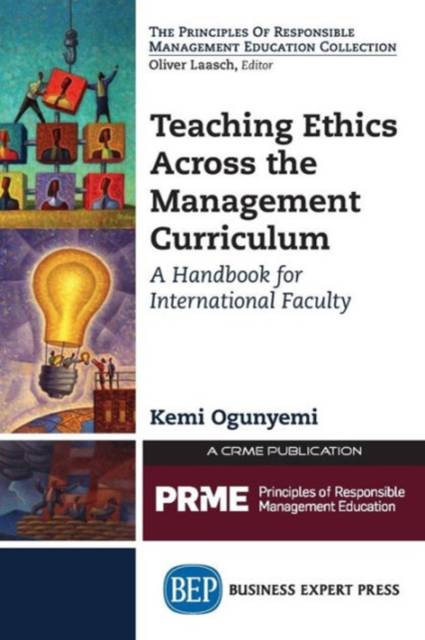
Teaching Ethics Across the Management Curriculum
A Handbook for International Faculty
Kemi Ogunyemi
Paperback | Engels
€ 30,95
+ 61 punten
Omschrijving
The chief executive officer (CEO) of a corporation and his or her executive team are responsible for the management of the business and its continued operating and financial success. The CEO and executive team are almost always highly compensated and the relative total compensation has mushroomed over time. Most of the compensation now is designed to be performance-based, but leading to charges that executives have incentives to manipulate corporate earnings and stock price in the short-term for their own self interests. The compensation at some companies became so egregious that compensation again became a major public policy issue subject to federal regulation. Executive Compensation focuses on the major topics related to executive compensation-present, past, and future. First, is understanding what executive compensation is, including composition and objectives of pay contracts. Second, how do specific compensation agreements affect corporate behavior and performance? Third, what are the major components, including how and what are accounted for and disclosed? How is compensation, especially executive compensation, accounted for-that is, what are the calculations and journal entries required? Fourth, what does historical analysis tell us about the topic, especially how contractual decisions have been made and what has worked. Finally, what is in store for the future-both expected compensation agreements and what the compensation incentives suggest for future corporate decisions on operations and accounting manipulation.
Specificaties
Betrokkenen
- Auteur(s):
- Uitgeverij:
Inhoud
- Aantal bladzijden:
- 197
- Taal:
- Engels
Eigenschappen
- Productcode (EAN):
- 9781606497944
- Verschijningsdatum:
- 17/12/2014
- Uitvoering:
- Paperback
- Formaat:
- Trade paperback (VS)
- Afmetingen:
- 152 mm x 229 mm
- Gewicht:
- 512 g



Alleen bij Standaard Boekhandel
+ 61 punten op je klantenkaart van Standaard Boekhandel

Beoordelingen
We publiceren alleen reviews die voldoen aan de voorwaarden voor reviews. Bekijk onze voorwaarden voor reviews.