


- Afhalen na 1 uur in een winkel met voorraad
- Gratis thuislevering in België vanaf € 30
- Ruim aanbod met 7 miljoen producten
- Afhalen na 1 uur in een winkel met voorraad
- Gratis thuislevering in België vanaf € 30
- Ruim aanbod met 7 miljoen producten





Omschrijving
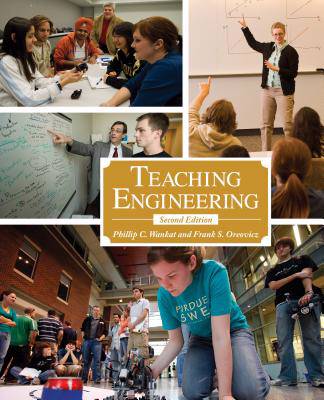
The majority of professors have never had a formal course in education, and the most common method for learning how to teach is on-the-job training. This represents a challenge for disciplines with ever more complex subject matter, and a lost opportunity when new active learning approaches to education are yielding dramatic improvements in student learning and retention. This book aims to cover all aspects of teaching engineering and other technical subjects. It presents both practical matters and educational theories in a format useful for both new and experienced teachers. It is organized to start with specific, practical teaching applications and then leads to psychological and educational theories. The "practical orientation" section explains how to develop objectives and then use them to enhance student learning, and the "theoretical orientation" section discusses the theoretical basis for learning/teaching and its impact on students. Written mainly for PhD students and professors in all areas of engineering, the book may be used as a text for graduate-level classes and professional workshops or by professionals who wish to read it on their own. Although the focus is engineering education, most of this book will be useful to teachers in other disciplines. Teaching is a complex human activity, so it is impossible to develop a formula that guarantees it will be excellent. However, the methods in this book will help all professors become good teachers while spending less time preparing for the classroom. This is a new edition of the well-received volume published by McGraw-Hill in 1993. It includes an entirely revised section on the Accreditation Board for Engineering and Technology (ABET) and new sections on the characteristics of great teachers, different active learning methods, the application of technology in the classroom (from clickers to intelligent tutorial systems), and how people learn.
Specificaties
Betrokkenen
- Uitgeverij:
Inhoud
- Aantal bladzijden:
- 494
- Taal:
- Engels
Eigenschappen
- Productcode (EAN):
- 9781557537003
- Verschijningsdatum:
- 15/01/2015
- Uitvoering:
- Paperback
- Formaat:
- Trade paperback (VS)
- Afmetingen:
- 178 mm x 234 mm
- Gewicht:
- 929 g

Alleen bij Standaard Boekhandel
+ 220 punten op je klantenkaart van Standaard Boekhandel
Cadeau

AANGERADEN


Beoordelingen
We publiceren alleen reviews die voldoen aan de voorwaarden voor reviews. Bekijk onze voorwaarden voor reviews.