


- Afhalen na 1 uur in een winkel met voorraad
- Gratis thuislevering in België vanaf € 30
- Ruim aanbod met 7 miljoen producten
- Afhalen na 1 uur in een winkel met voorraad
- Gratis thuislevering in België vanaf € 30
- Ruim aanbod met 7 miljoen producten





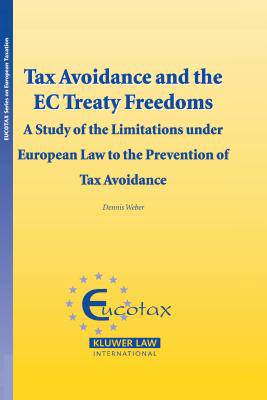
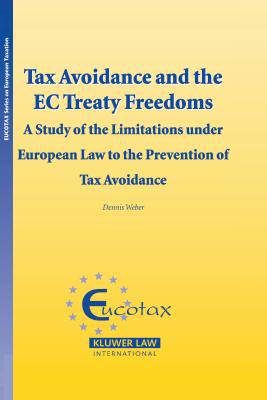
Tax Avoidance and the EC Treaty Freedoms
A Study of the Limitations under European Law for the Prevention of Tax Avoidance
Dennis Weber
€ 361,45
+ 722 punten
Omschrijving
This unique book investigates the extent tot which a taxpayer may invoke the freedom of movement within the Community in order to avoid national direct taxes. A Member State's right to protect its taxing authority and tax jurisdiction may collide with a Union citizen's right to free movement under Community law. The author shows what at the national level is viewed as abuse may often be viewed from an EC law perspective as invoking the Treaty freedoms. As his starting point, the author describes relevant Community law as it stands at present, whereby Member States are exclusively authorized to determine the types, tax bases, rates, and procedural aspects of direct taxes. He goes on to examine the possibilities offered by primary EC law to cross-border taxpayers who seek to avoid tax, basing his presentation on an in-depth analysis of the tax and non-tax case law of the Court of Justice of the European Communities. Among the issues raised in the course of the analysis are the following: applicability of each of the freedoms of the citizen, of goods, of workers, of establishment, of services, and of capital; tests entailed by Community law: the economic activity test, the artificiality test, and the substance test; the extent to which holding and letterbox companies may invoke the freedom of movement; and the fiscal cohesion justification. The author describes the implicit concept of avoidance that the Court apparently uses by examining its tax and non-tax decisions in avoidance-like cases, thus offering a valuable discussion of whether the anti-abuse doctrine development by the Court is a principle of Community law. In its thorough investigation of a major current manifestation of the emblematic conflict between state taxing authority and personal freedom, this thoughtful and well-researched analysis will be of great value to tax professionals, officials, and academics not only on Europe but wherever this fundamental problem in tax law applies.
Specificaties
Betrokkenen
- Auteur(s):
- Uitgeverij:
Inhoud
- Aantal bladzijden:
- 310
- Taal:
- Engels
- Reeks:
Eigenschappen
- Productcode (EAN):
- 9789041124029
- Verschijningsdatum:
- 1/07/2005
- Uitvoering:
- Hardcover
- Formaat:
- Genaaid
- Afmetingen:
- 166 mm x 249 mm
- Gewicht:
- 653 g


Alleen bij Standaard Boekhandel
+ 722 punten op je klantenkaart van Standaard Boekhandel
Cadeau

AANGERADEN


Beoordelingen
We publiceren alleen reviews die voldoen aan de voorwaarden voor reviews. Bekijk onze voorwaarden voor reviews.