


- Afhalen na 1 uur in een winkel met voorraad
- Gratis thuislevering in België vanaf € 30
- Ruim aanbod met 7 miljoen producten
- Afhalen na 1 uur in een winkel met voorraad
- Gratis thuislevering in België vanaf € 30
- Ruim aanbod met 7 miljoen producten


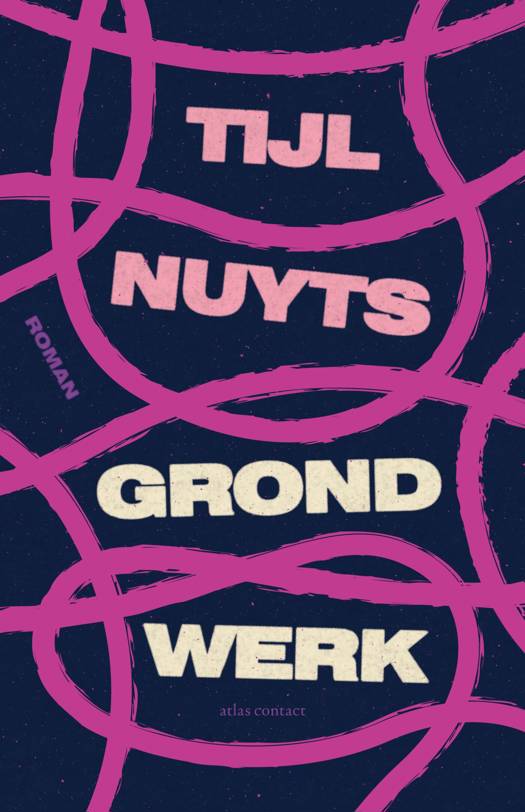


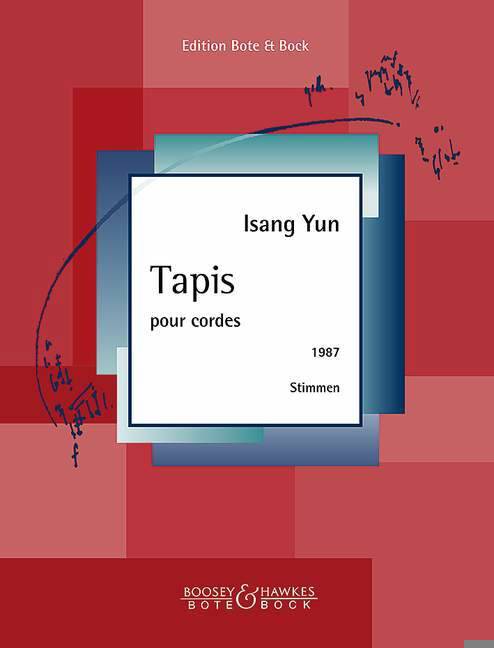
Omschrijving
The title Tapis – meaning carpet, fabric – refers to the fabric-like structure of sound surfaces which confirm Yun's view of the note as a 'brushstroke', as a string of sounds. Tapis, which can be performed by both solo instrument and string orchestra, is woven of small and minuscule intervallic cells. On the other hand, the arrangement of such cells into chains leads to broad melodic developments in an almost symphonically dense air.
The virtuoso work shows an almost symmetrical tripartite form with the tempo characteristics fast – slow – fast. Yun divides the five-part setting into the sound groups of the low and high strings, with the viola taking a mediating position and entering into changing alliances with the violins or the basses. The sequence of the first nine bars anticipates the overall form – at least the fast outer sections – on a small scale: Small intervals are dominating; powerfully articulated motivic cells expanded by trills and glissandos into strings of sounds are forced up – heavenward – until bar 7 and then plummet rather abruptly into the depths. The melodic development is carried by the high strings which are rhythmically supported by pizzicato impulses of the low strings. In the following, the structure is determined throughout by Yun's principle of 'change of roles': In bar 9, the low strings take up the melodic air of the violins and are given a rhythmic shape by short two-note motifs of the upper parts.
In the contrasting middle section, Yun displays the cantabile style of a dolce setting. In the final third section, he achieves an extreme escalation and extreme expression by using massive conglomerations of sounds, rhythmic and gestural amalgamation processes, extreme dynamics, and extremely high positions.
Walter-Wolfgang Sparrer (1999)
Instrumentation:
2 violins, viola, cello and double bass
The virtuoso work shows an almost symmetrical tripartite form with the tempo characteristics fast – slow – fast. Yun divides the five-part setting into the sound groups of the low and high strings, with the viola taking a mediating position and entering into changing alliances with the violins or the basses. The sequence of the first nine bars anticipates the overall form – at least the fast outer sections – on a small scale: Small intervals are dominating; powerfully articulated motivic cells expanded by trills and glissandos into strings of sounds are forced up – heavenward – until bar 7 and then plummet rather abruptly into the depths. The melodic development is carried by the high strings which are rhythmically supported by pizzicato impulses of the low strings. In the following, the structure is determined throughout by Yun's principle of 'change of roles': In bar 9, the low strings take up the melodic air of the violins and are given a rhythmic shape by short two-note motifs of the upper parts.
In the contrasting middle section, Yun displays the cantabile style of a dolce setting. In the final third section, he achieves an extreme escalation and extreme expression by using massive conglomerations of sounds, rhythmic and gestural amalgamation processes, extreme dynamics, and extremely high positions.
Walter-Wolfgang Sparrer (1999)
Instrumentation:
2 violins, viola, cello and double bass
Specificaties
Betrokkenen
- Uitgeverij:
Inhoud
- Aantal bladzijden:
- 20
Eigenschappen
- Productcode (EAN):
- 9790202534526
- Verschijningsdatum:
- 4/08/2016
- Afmetingen:
- 231 mm x 303 mm
- Gewicht:
- 96 g

Alleen bij Standaard Boekhandel
+ 31 punten op je klantenkaart van Standaard Boekhandel
AANGERADEN


Beoordelingen
We publiceren alleen reviews die voldoen aan de voorwaarden voor reviews. Bekijk onze voorwaarden voor reviews.