


- Afhalen na 1 uur in een winkel met voorraad
- Gratis thuislevering in België vanaf € 30
- Ruim aanbod met 7 miljoen producten
- Afhalen na 1 uur in een winkel met voorraad
- Gratis thuislevering in België vanaf € 30
- Ruim aanbod met 7 miljoen producten





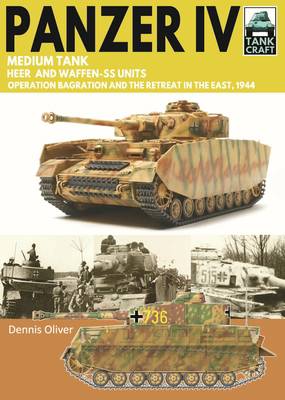
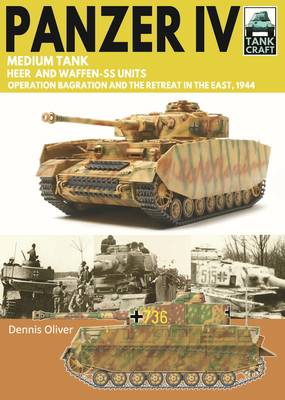
Tank Craft 51 Panzer IV Medium Tank
Operation Bagration and the Retreat in the East, 1944
Dennis Oliver
Paperback | Engels
€ 27,95
+ 55 punten
Omschrijving
Throughout the Second World War, despite the appearance of such powerful armoured fighting vehicles as the Tiger and Panther tanks, the versatile Panzerkampfwagen IV, or Pzkpfw IV, which was commonly known as the Panzer IV, provided the backbone of the Panzer regiments until the last days of the conflict.
Mechanically reliable and relatively cheap to produce, the Pzkpfw IV 's large wheel base and turret circumference meant that it could be up-gunned with minimal disruption to production and the rugged hull and suspension were adapted to a number of diverse roles including self-propelled anti-tank gun, anti-aircraft tank, bridgelayer and armoured recovery vehicle. Originally designed and developed to provide support for the infantry formations of Germany's armoured divisions, the Pzkpfw IV was increasingly pressed into service as a tank killer as stronger and more well-armoured enemy vehicles were encountered.
Although assembly of the Pzkpfw IV was officially terminated in late 1944, as the tank had fallen out of favour with Hitler, production was soon resumed and as late as March 1945 the Panzer units operating in the East reported that over 600 were on hand.
In the third volume in the TankCraft series to examine this deservedly famous armoured vehicle, Dennis Oliver employs official documentation and unit histories to investigate the formations that operated these vehicles and uses archive photos and extensively researched colour illustrations to examine the markings, camouflage and technical aspects of the Pzkpfw IV tanks that served on the Eastern Front during 1944.
A key section of his book displays available model kits and aftermarket products, complemented by a gallery of beautifully constructed and painted models in various scales. Technical details as well as modifications introduced during production and in the field are also examined, providing everything the modeller needs to recreate an accurate representation of these historic vehicles.
Mechanically reliable and relatively cheap to produce, the Pzkpfw IV 's large wheel base and turret circumference meant that it could be up-gunned with minimal disruption to production and the rugged hull and suspension were adapted to a number of diverse roles including self-propelled anti-tank gun, anti-aircraft tank, bridgelayer and armoured recovery vehicle. Originally designed and developed to provide support for the infantry formations of Germany's armoured divisions, the Pzkpfw IV was increasingly pressed into service as a tank killer as stronger and more well-armoured enemy vehicles were encountered.
Although assembly of the Pzkpfw IV was officially terminated in late 1944, as the tank had fallen out of favour with Hitler, production was soon resumed and as late as March 1945 the Panzer units operating in the East reported that over 600 were on hand.
In the third volume in the TankCraft series to examine this deservedly famous armoured vehicle, Dennis Oliver employs official documentation and unit histories to investigate the formations that operated these vehicles and uses archive photos and extensively researched colour illustrations to examine the markings, camouflage and technical aspects of the Pzkpfw IV tanks that served on the Eastern Front during 1944.
A key section of his book displays available model kits and aftermarket products, complemented by a gallery of beautifully constructed and painted models in various scales. Technical details as well as modifications introduced during production and in the field are also examined, providing everything the modeller needs to recreate an accurate representation of these historic vehicles.
Specificaties
Betrokkenen
- Auteur(s):
- Uitgeverij:
Inhoud
- Aantal bladzijden:
- 64
- Taal:
- Engels
Eigenschappen
- Productcode (EAN):
- 9781036185251
- Verschijningsdatum:
- 30/11/2026
- Uitvoering:
- Paperback
- Formaat:
- Trade paperback (VS)
- Afmetingen:
- 159 mm x 235 mm


Alleen bij Standaard Boekhandel
+ 55 punten op je klantenkaart van Standaard Boekhandel
Cadeau

AANGERADEN


Beoordelingen
We publiceren alleen reviews die voldoen aan de voorwaarden voor reviews. Bekijk onze voorwaarden voor reviews.