


- Afhalen na 1 uur in een winkel met voorraad
- Gratis thuislevering in België vanaf € 30
- Ruim aanbod met 7 miljoen producten
- Afhalen na 1 uur in een winkel met voorraad
- Gratis thuislevering in België vanaf € 30
- Ruim aanbod met 7 miljoen producten





€ 93,45
+ 186 punten
Omschrijving
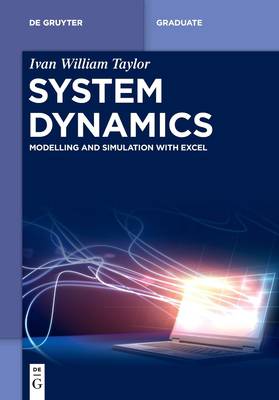
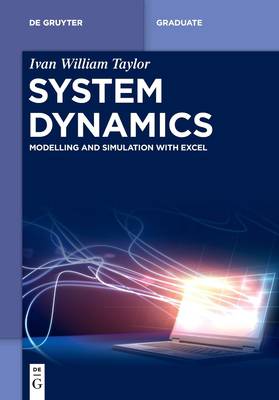
"System Dynamics Modeling and Simulation with Excel is a practical guide to understanding and managing complex, dynamic systems using a tool most professionals already know: Microsoft Excel.The book shows how to build, test, and analyze System Dynamics models without programming. No prior knowledge of Excel or System Dynamics is assumed. Through worked examples, readers learn how feedback, accumulation, delays, and non-linear relationships drive real-world behavior over time-and why small structural changes can produce large, and often counter-intuitive, effects.System Dynamics is used to answer three persistent questions faced by decision-makers: Where are we now? How did we get here? And where are we headed if current trends continue? The emphasis throughout is on policy exploration-using models to test interventions safely before acting in the real world.Excel is used deliberately as a transparent modeling environment rather than a black-box simulator. Readers are taken step by step through model formulation, simulation, testing, and interpretation. Case studies are drawn from business, healthcare, environmental sustainability, and public policy, illustrating how the same underlying principles apply across domains.By the end of the book, readers will be able to design and simulate their own System Dynamics models in Excel and use them to reason more clearly about complex problems in practice.
Specificaties
Betrokkenen
- Uitgeverij:
Inhoud
- Aantal bladzijden:
- 352
- Taal:
- Engels
- Reeks:
Eigenschappen
- Productcode (EAN):
- 9783111540856
- Verschijningsdatum:
- 1/06/2026
- Uitvoering:
- Paperback
- Formaat:
- Trade paperback (VS)
- Afmetingen:
- 170 mm x 244 mm
- Gewicht:
- 562 g

Alleen bij Standaard Boekhandel
+ 186 punten op je klantenkaart van Standaard Boekhandel
Cadeau

AANGERADEN


Beoordelingen
We publiceren alleen reviews die voldoen aan de voorwaarden voor reviews. Bekijk onze voorwaarden voor reviews.