


- Afhalen na 1 uur in een winkel met voorraad
- Gratis thuislevering in België vanaf € 30
- Ruim aanbod met 7 miljoen producten
- Afhalen na 1 uur in een winkel met voorraad
- Gratis thuislevering in België vanaf € 30
- Ruim aanbod met 7 miljoen producten





€ 112,95
+ 225 punten
Uitvoering
Omschrijving
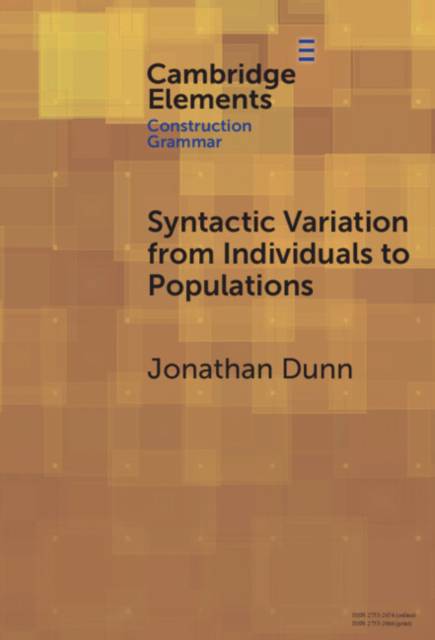
This Element presents a computational theory of syntactic variation that brings together (i) models of individual differences across distinct speakers, (ii) models of dialectal differences across distinct populations, and (iii) models of register differences across distinct contexts. This computational theory is based in Construction Grammar (CxG) because its usage-based representations can capture differences in productivity across multiple levels of abstraction. Drawing on corpora representing over 300 local dialects across fourteen countries, this Element undertakes three data-driven case-studies to show how variation unfolds across the entire grammar. These case-studies are reproducible given supplementary material that accompanies the Element. Rather than focus on discrete variables in isolation, we view the grammar as a complex system. The essential advantage of this computational approach is scale: we can observe an entire grammar across many thousands of speakers representing dozens of local populations.
Specificaties
Betrokkenen
- Auteur(s):
- Uitgeverij:
Inhoud
- Aantal bladzijden:
- 106
- Taal:
- Engels
- Reeks:
Eigenschappen
- Productcode (EAN):
- 9781009644358
- Verschijningsdatum:
- 5/02/2026
- Uitvoering:
- Hardcover
- Formaat:
- Genaaid
- Afmetingen:
- 152 mm x 229 mm
- Gewicht:
- 312 g


Alleen bij Standaard Boekhandel
+ 225 punten op je klantenkaart van Standaard Boekhandel
AANGERADEN


Beoordelingen
We publiceren alleen reviews die voldoen aan de voorwaarden voor reviews. Bekijk onze voorwaarden voor reviews.