


- Afhalen na 1 uur in een winkel met voorraad
- Gratis thuislevering in België vanaf € 30
- Ruim aanbod met 7 miljoen producten
- Afhalen na 1 uur in een winkel met voorraad
- Gratis thuislevering in België vanaf € 30
- Ruim aanbod met 7 miljoen producten





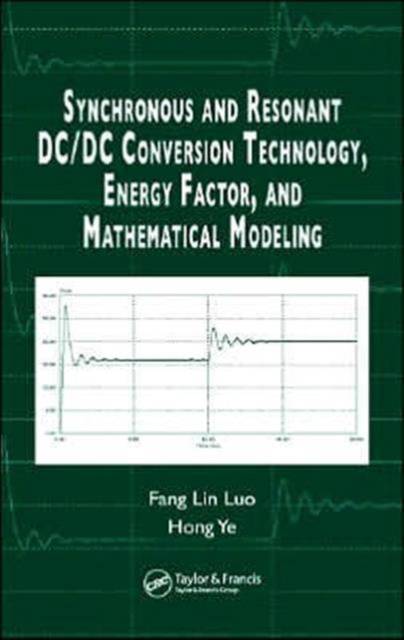
Synchronous and Resonant DC/DC Conversion Technology, Energy Factor, and Mathematical Modeling
Fang Lin Luo, Hong Ye
Hardcover | Engels
€ 244,45
+ 488 punten
Omschrijving
Numbers alone are enough to describe the importance of DC/DC converters in modern power engineering. There are more than 500 recognized topologies, with more added each year. In their groundbreaking book Advanced DC/DC Converters, expert researchers Luo and Ye organized these technologies into six generations and illustrated their principles and operation through examples of over 100 original topologies. In chapters carefully drawn from that work, Synchronous and Resonant DC/DC Conversion Technology, Energy Factor, and Mathematical Modeling provides a focused, concise overview of synchronous and multiple-element resonant power converters. This reference carefully examines the topologies of more than 50 synchronous and resonant converters by illustrating the design of several prototypes developed by the authors. Using more than 100 diagrams as illustration, the book supplies insight into the fundamental concepts, design, and applications of the fifth (synchronous) and sixth (multiple-element resonant) converters as well as DC power sources and control circuits. The authors also discuss EMI/EMC problems and include a new chapter that introduces the new concept of Energy Factor (EF) and its importance in mathematical modeling as well as analyzing the transient process and impulse response of DC/DC converters. Synchronous and Resonant DC/DC Conversion Technology, Energy Factor, and Mathematical Modeling supplies a quick and accessible guide for anyone in need of specialized information on synchronous and resonant DC/DC converter technologies.
Specificaties
Betrokkenen
- Auteur(s):
- Uitgeverij:
Inhoud
- Aantal bladzijden:
- 262
- Taal:
- Engels
Eigenschappen
- Productcode (EAN):
- 9780849372377
- Verschijningsdatum:
- 31/10/2005
- Uitvoering:
- Hardcover
- Formaat:
- Genaaid
- Afmetingen:
- 164 mm x 242 mm
- Gewicht:
- 512 g


Alleen bij Standaard Boekhandel
+ 488 punten op je klantenkaart van Standaard Boekhandel
Cadeau

AANGERADEN


Beoordelingen
We publiceren alleen reviews die voldoen aan de voorwaarden voor reviews. Bekijk onze voorwaarden voor reviews.