


- Afhalen na 1 uur in een winkel met voorraad
- Gratis thuislevering in België vanaf € 30
- Ruim aanbod met 7 miljoen producten
- Afhalen na 1 uur in een winkel met voorraad
- Gratis thuislevering in België vanaf € 30
- Ruim aanbod met 7 miljoen producten





€ 18,95
+ 37 punten
Omschrijving
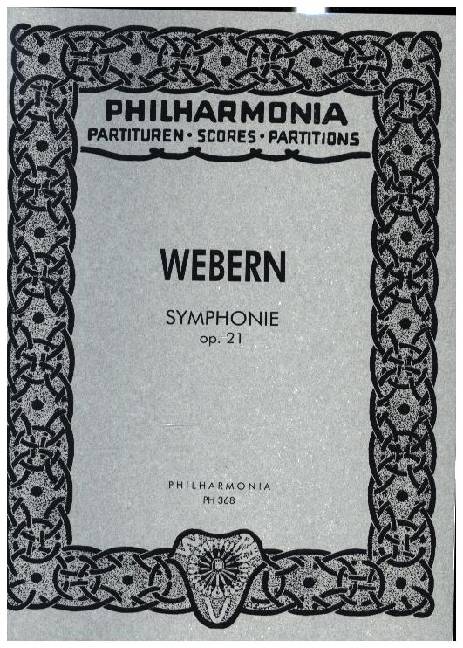
The Symphony is the first major work (also in respect of its instrumentation) that Webern wrote using the technique of twelve-note composition. Admittedly it is scarcely any bigger than the "String Trio" which immediately preceded it, and the instrumentation is deceptive as far as volume is concerned, since the texture at no point exceeds the classical norm of four-part writing. Cum grano salis, one could describe the Symphony as a quartet for nine instruments. What distinguishes it from Webern's earlier compositions, including the "String Trio", is no less perceptible (all the more so, in fact) because it involves both qualitative and quantitative features. Besides, the differences are not limited to this or that component of the music, but lie rather in its substance. The specific form taken by the instrumentation is an example: it is not because the Symphony is scored the way it is that it differs from Webern's earlier music; rather, it is because it is different (despite features in common) that it is scored in this way. The nature of this difference could be described as a higher degree of technical perfection or intellectual penetration which comes fully into play here for the first time, thus revealing Webern's originality in what is, perhaps, a more precisely characterized manner. (F.S)Instrumentation:for orchestraop. 21
Specificaties
Betrokkenen
- Uitgeverij:
Inhoud
- Taal:
- Engels
- Reeks:
Eigenschappen
- Productcode (EAN):
- 9783702427832
- Uitvoering:
- Paperback
- Afmetingen:
- 135 mm x 4 mm
- Gewicht:
- 46 g


Alleen bij Standaard Boekhandel
+ 37 punten op je klantenkaart van Standaard Boekhandel
CADEAU

AANGERADEN


Beoordelingen
We publiceren alleen reviews die voldoen aan de voorwaarden voor reviews. Bekijk onze voorwaarden voor reviews.