


- Afhalen na 1 uur in een winkel met voorraad
- Gratis thuislevering in België vanaf € 30
- Ruim aanbod met 7 miljoen producten
- Afhalen na 1 uur in een winkel met voorraad
- Gratis thuislevering in België vanaf € 30
- Ruim aanbod met 7 miljoen producten





Omschrijving
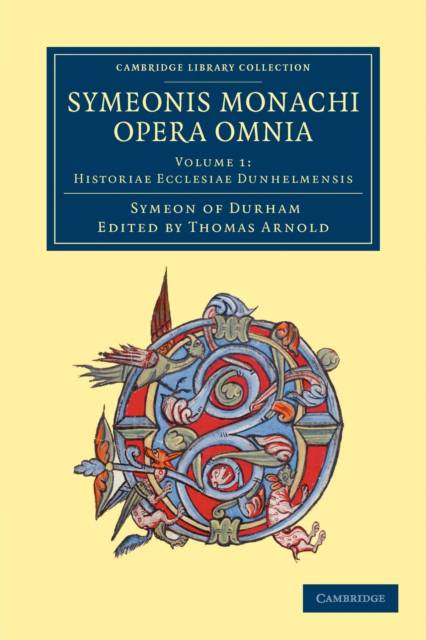
Little is known about the life of Symeon of Durham (fl. c.1090-c.1128), other than that he was one of the monks present at the translation of the remains of Saint Cuthbert in 1104. His eyewitness account of the opening of Cuthbert's coffin is just one of his writings included in this first volume of his complete works, published for the Rolls Series in 1882. The main Latin text here is his history of the church of Durham up to the year 1096, which draws on Northumbrian annals and provides much valuable information not found elsewhere. Supplemental to this are chapters relating to the see of Durham and the miracles of Cuthbert. The appendices comprise a poem by Adelwulf on the abbots of his monastery, and the lives of Bartholomew the Anchorite and Saint Oswald. Thomas Arnold (1823-1900) provides an extensive introduction as well as English side-notes to the Latin texts.
Specificaties
Betrokkenen
- Auteur(s):
- Uitgeverij:
Inhoud
- Aantal bladzijden:
- 480
- Taal:
- Engels
- Reeks:
Eigenschappen
- Productcode (EAN):
- 9781108051620
- Verschijningsdatum:
- 15/11/2012
- Uitvoering:
- Paperback
- Formaat:
- Trade paperback (VS)
- Afmetingen:
- 152 mm x 229 mm
- Gewicht:
- 698 g


Alleen bij Standaard Boekhandel
+ 212 punten op je klantenkaart van Standaard Boekhandel
AANGERADEN


Beoordelingen
We publiceren alleen reviews die voldoen aan de voorwaarden voor reviews. Bekijk onze voorwaarden voor reviews.