Standaard Boekhandel gebruikt cookies en gelijkaardige technologieën om de website goed te laten werken en je een betere surfervaring te bezorgen.
Hieronder kan je kiezen welke cookies je wilt inschakelen:
Technische en functionele cookies
Deze cookies zijn essentieel om de website goed te laten functioneren, en laten je toe om bijvoorbeeld in te loggen. Je kan deze cookies niet uitschakelen.
Analytische cookies
Deze cookies verzamelen anonieme informatie over het gebruik van onze website. Op die manier kunnen we de website beter afstemmen op de behoeften van de gebruikers.
Marketingcookies
Deze cookies delen je gedrag op onze website met externe partijen, zodat je op externe platformen relevantere advertenties van Standaard Boekhandel te zien krijgt.
Je cadeautjes zeker op tijd in huis hebben voor de feestdagen? Kom langs in onze winkels en vind het perfecte geschenk!
Afhalen na 1 uur in een winkel met voorraad
Gratis thuislevering in België vanaf € 30
Ruim aanbod met 7 miljoen producten
Je cadeautjes zeker op tijd in huis hebben voor de feestdagen? Kom langs in onze winkels en vind het perfecte geschenk!
Je kan maximaal 250 producten tegelijk aan je winkelmandje toevoegen. Verwijdere enkele producten uit je winkelmandje, of splits je bestelling op in meerdere bestellingen.
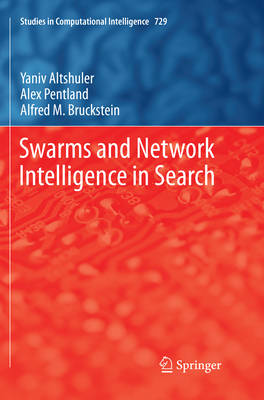
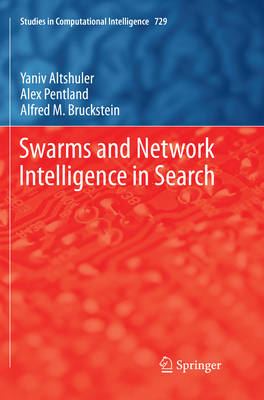
This book offers a comprehensive analysis of the theory and tools needed for the development of an efficient and robust infrastructure for the design of collaborative patrolling unmanned aerial vehicle (UAV) swarms, focusing on its applications for tactical intelligence drones. It discusses frameworks for robustly and near-optimally analyzing flocks of semi-autonomous vehicles designed to efficiently perform the ongoing dynamic patrolling and scanning of pre-defined "search regions". It discusses the theoretical limitations of such systems, as well as the trade-offs between the systems' various economic and operational parameters. Current UAV systems rely mainly on human operators for the design and adaptation of drones' flying routes. However, recent technological advances have introduced new systems, comprised of a small number of self-organizing vehicles, manually guided at the swarm level by a human operator. With the growing complexity of such man-supervised architectures, it is becoming increasingly harder to guarantee a pre-defined level of performance. The use of large scale swarms of UAVs as a combat and reconnaissance platform therefore necessitates the development of an efficient optimization mechanism of their utilization, specifically in the design and maintenance of their patrolling routes. The book is intended for researchers and engineers in the fields of swarms systems and autonomous drones.