


- Afhalen na 1 uur in een winkel met voorraad
- Gratis thuislevering in België vanaf € 30
- Ruim aanbod met 7 miljoen producten
- Afhalen na 1 uur in een winkel met voorraad
- Gratis thuislevering in België vanaf € 30
- Ruim aanbod met 7 miljoen producten





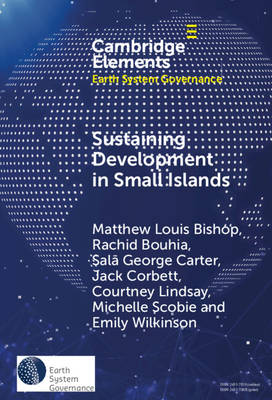
Sustaining Development in Small Islands
Climate Change, Geopolitical Security, and the Permissive Liberal Order
Matthew Louis Bishop, Rachid Bouhia, Salā George Carter, Jack Corbett, Courtney Lindsay, Michelle Scobie, Emily Wilkinson
€ 124,45
+ 248 punten
Uitvoering
Omschrijving
The viability of small island developing states (SIDS) is threatened by three distinct processes - a backlash against globalisation; rising geopolitical competition between powers; and accelerating climate change - which are pulling at the threads binding the liberal international order together. We suggest that this order has been kinder to SIDS than is often acknowledged because its underpinning norms - sovereign equality, non-interference, and right to development - are inherently permissive and thus provide SIDS with choices rather than imperatives. Their leaders should fight for the continuation and enhancement of that order rather than be seduced by alternatives. We provide a rationale for and examples of policies to achieve this, including reforms to the way ODA is measured, debt restructured, climate finance allocated, and global governance organised. These enhancements represent the most plausible pathway for SIDS in a period of significant global upheaval. This title is also available as Open Access on Cambridge Core.
Specificaties
Betrokkenen
- Auteur(s):
- Uitgeverij:
Inhoud
- Aantal bladzijden:
- 108
- Taal:
- Engels
- Reeks:
Eigenschappen
- Productcode (EAN):
- 9781009565332
- Verschijningsdatum:
- 30/01/2025
- Uitvoering:
- Hardcover
- Formaat:
- Genaaid
- Afmetingen:
- 152 mm x 229 mm
- Gewicht:
- 317 g


Alleen bij Standaard Boekhandel
+ 248 punten op je klantenkaart van Standaard Boekhandel
Cadeau

AANGERADEN


Beoordelingen
We publiceren alleen reviews die voldoen aan de voorwaarden voor reviews. Bekijk onze voorwaarden voor reviews.