


- Afhalen na 1 uur in een winkel met voorraad
- Gratis thuislevering in België vanaf € 30
- Ruim aanbod met 7 miljoen producten
- Afhalen na 1 uur in een winkel met voorraad
- Gratis thuislevering in België vanaf € 30
- Ruim aanbod met 7 miljoen producten





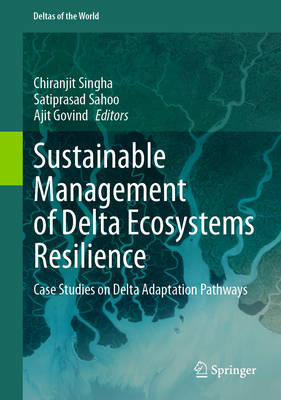
Sustainable Management of Delta Ecosystems Resilience
Case Studies on Delta Adaptation Pathways
€ 184,45
+ 368 punten
Omschrijving
This book bridges the gap between research, practice, and policy by offering practical insights and evidence-based solutions. It provides a comprehensive guide to addressing the pressing challenges posed by climate change and extensive anthropogenic activities on the health of global delta ecosystems. Through in-depth analysis, the book examines delta ecosystem resiliency, sustainable practices, and strategies for restoring and safeguarding natural resources. The book underscores the critical importance of studying rivers for their resilience, emphasizing the biophysical aspects of riverine landscapes and their interactions with ecosystems. It highlights how urbanization, groundwater extraction, agricultural intensification, channel regulation, and upstream activities like water withdrawals, diversion, and sediment trapping combine with coastal hazards - such as sea level rise, salinity intrusion, and hurricanes - to jeopardize delta social-ecological systems. Modern geospatial technologies play a prominent role, with discussions on data mining, analysis, modeling, assessment, and visualization techniques. The book explores appropriate management strategies and cutting-edge approaches to delta health management, leveraging open-source software, statistical programming, modeling platforms, and artificial intelligence. These strategies aim to address the multifaceted challenges of delta management while contributing to multiple Sustainable Development Goals (SDGs), including SDG2, SDG6, SDG13, SDG14, SDG15, and SDG17. Organized into thematic chapters, the book combines theoretical frameworks, empirical research, and actionable recommendations. It integrates data from diverse delta regions to provide a holistic perspective, enhanced by diagrams, charts, maps, and case studies for improved understanding and practical application. This approach ensures the book serves as both a foundational reference and an inspirational guide for fostering resilient and sustainable delta ecosystems capable of withstanding climate uncertainties and human-induced pressures. The book is a valuable resource for researchers, policymakers, administrators, educators, local communities, farmers, and practitioners. It offers innovative practices and adaptive strategies to promote sustainable delta ecosystem resilience in the face of climate challenges and extensive anthropogenic activities.
Specificaties
Betrokkenen
- Uitgeverij:
Inhoud
- Aantal bladzijden:
- 383
- Taal:
- Engels
- Reeks:
Eigenschappen
- Productcode (EAN):
- 9783032162601
- Verschijningsdatum:
- 11/07/2026
- Uitvoering:
- Hardcover
- Formaat:
- Genaaid
- Afmetingen:
- 168 mm x 240 mm

Alleen bij Standaard Boekhandel
+ 368 punten op je klantenkaart van Standaard Boekhandel
Cadeau

AANGERADEN


Beoordelingen
We publiceren alleen reviews die voldoen aan de voorwaarden voor reviews. Bekijk onze voorwaarden voor reviews.