


- Afhalen na 1 uur in een winkel met voorraad
- Gratis thuislevering in België vanaf € 30
- Ruim aanbod met 7 miljoen producten
- Afhalen na 1 uur in een winkel met voorraad
- Gratis thuislevering in België vanaf € 30
- Ruim aanbod met 7 miljoen producten





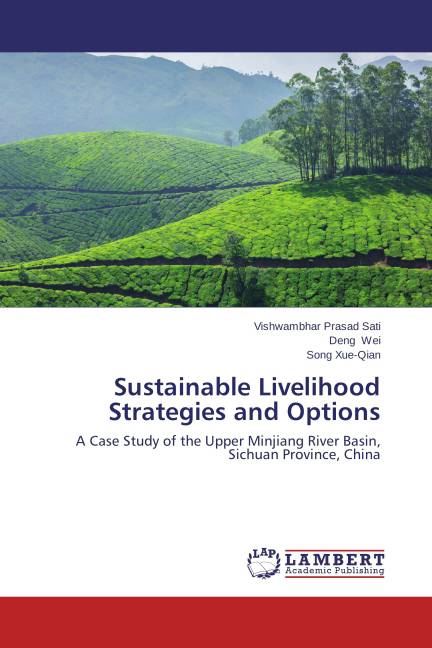
Sustainable Livelihood Strategies and Options
A Case Study of the Upper Minjiang River Basin, Sichuan Province, China
Vishwambhar Prasad Sati, Deng Wei, Song Xue-Qian
Paperback | Engels
€ 35,45
+ 70 punten
Omschrijving
Livelihood strategies can be defined as increased well-being, reduced vulnerability, improved food security and more sustainable use of natural resources base. It largely depends on the availability of livelihood assets/capitals natural, human, financial, physical, and social. Vulnerability context shocks, trends and seasonality; and institutional and policy context are the other aspects of livelihood strategies. A sustainable livelihood is a situation, where all these aspects are controlled and they have great potential to future livelihood sustainability. In this monograph, we studied 'sustainable livelihood strategies and options in the Upper Minjiang River Basin, Sichuan Province, China'. The sustainable livelihood approach context was applied and livelihood assets/capitals of the three villages were assessed. This region is very rich in ecological services - land, water and air. Forest resources are abundant. If these natural resources are harnessed optimally, livelihood sustainability can be attended. This study is useful to all stakeholders - policy makers, academicians, researchers and farmers.
Specificaties
Betrokkenen
- Auteur(s):
- Uitgeverij:
Inhoud
- Aantal bladzijden:
- 76
- Taal:
- Engels
Eigenschappen
- Productcode (EAN):
- 9783659598241
- Verschijningsdatum:
- 11/09/2014
- Uitvoering:
- Paperback
- Afmetingen:
- 150 mm x 220 mm
- Gewicht:
- 122 g


Alleen bij Standaard Boekhandel
+ 70 punten op je klantenkaart van Standaard Boekhandel
Cadeau

AANGERADEN


Beoordelingen
We publiceren alleen reviews die voldoen aan de voorwaarden voor reviews. Bekijk onze voorwaarden voor reviews.