


- Afhalen na 1 uur in een winkel met voorraad
- Gratis thuislevering in België vanaf € 30
- Ruim aanbod met 7 miljoen producten
- Afhalen na 1 uur in een winkel met voorraad
- Gratis thuislevering in België vanaf € 30
- Ruim aanbod met 7 miljoen producten





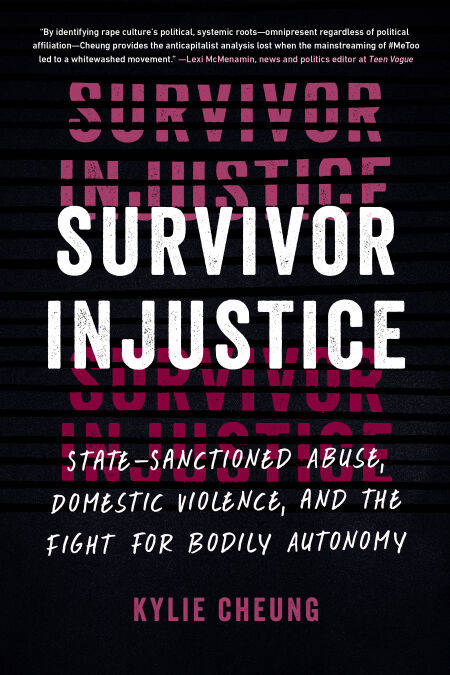
Survivor Injustice E-BOOK
State-Sanctioned Abuse, Domestic Violence, and the Fight for Bodily Autonomy
Kylie Cheung
E-book | Engels
€ 19,66
+ 19 punten
Omschrijving
Journalist and Jezebel staff writer Kylie Cheung exposes the insidious--and often unseen--connections among domestic abuse, state-based violence, political disenfranchisement, and the carceral state.
"An astonishingly original, powerfully honest vision for true survivor justice." —Kirkus, starred review
For readers of The Revolution Starts at Home, Feminism for the 99%, and Good and Mad.
Incisive, urgent, and written exactly for our post-Roe times, Survivor Injustice is the feminist frame-changing read we need now--for each of us, and for all that’s at stake.
With an abolitionist lens, journalist and Jezebel staff writer Kylie Cheung shows how domestic abuse and state violence are systemic and interconnected. She shatters the harmful and convenient narrative that abuse is a “private matter” perpetrated by individual bad actors--and situates popular understandings of domestic abuse in an indictment of the racism, misogyny, and carcerality baked into U.S. culture and politics. Cheung explores:
The links between capitalism and domestic abuse: how late-stage capitalism colludes with the state to incentivize forced birth and reproductive coercion Intimate partner violence as a tool of political silence and social control America’s tacit acceptance of sexual assault, from the home to the White House The interplay of race, power, gender, and sexuality in state-based violence How the United States runs on carcerality, and what that means for victims The way we view survival crimes, and our complicity in defining which acts are “violent” and whose actions are “criminal” How white feminism and carceral feminism fail us all Cheung plainly names all that goes unsaid when we, as a culture, talk about abuse: How state and society criminalize women, girls, and gender-oppressed people of color. That what happens behind closed doors affects whose voices we hear at the ballot box. What it means when we put predators--from every party--up for vote. That sex workers are more likely to be victimized by law enforcement than “saved” by them. That this is all by design. And that ultimately--with organizing, abolition, and beyond-the-ballot action--we can change it all for good.
"An astonishingly original, powerfully honest vision for true survivor justice." —Kirkus, starred review
For readers of The Revolution Starts at Home, Feminism for the 99%, and Good and Mad.
Incisive, urgent, and written exactly for our post-Roe times, Survivor Injustice is the feminist frame-changing read we need now--for each of us, and for all that’s at stake.
With an abolitionist lens, journalist and Jezebel staff writer Kylie Cheung shows how domestic abuse and state violence are systemic and interconnected. She shatters the harmful and convenient narrative that abuse is a “private matter” perpetrated by individual bad actors--and situates popular understandings of domestic abuse in an indictment of the racism, misogyny, and carcerality baked into U.S. culture and politics. Cheung explores:
The links between capitalism and domestic abuse: how late-stage capitalism colludes with the state to incentivize forced birth and reproductive coercion Intimate partner violence as a tool of political silence and social control America’s tacit acceptance of sexual assault, from the home to the White House The interplay of race, power, gender, and sexuality in state-based violence How the United States runs on carcerality, and what that means for victims The way we view survival crimes, and our complicity in defining which acts are “violent” and whose actions are “criminal” How white feminism and carceral feminism fail us all Cheung plainly names all that goes unsaid when we, as a culture, talk about abuse: How state and society criminalize women, girls, and gender-oppressed people of color. That what happens behind closed doors affects whose voices we hear at the ballot box. What it means when we put predators--from every party--up for vote. That sex workers are more likely to be victimized by law enforcement than “saved” by them. That this is all by design. And that ultimately--with organizing, abolition, and beyond-the-ballot action--we can change it all for good.
Specificaties
Betrokkenen
- Auteur(s):
- Uitgeverij:
Inhoud
- Aantal bladzijden:
- 304
- Taal:
- Engels
Eigenschappen
- Productcode (EAN):
- 9781623179090
- Verschijningsdatum:
- 14/08/2023
- Uitvoering:
- E-book
- Beveiligd met:
- Adobe DRM
- Formaat:
- ePub


Alleen bij Standaard Boekhandel
+ 19 punten op je klantenkaart van Standaard Boekhandel
CADEAU

AANGERADEN


Beoordelingen
We publiceren alleen reviews die voldoen aan de voorwaarden voor reviews. Bekijk onze voorwaarden voor reviews.