


- Afhalen na 1 uur in een winkel met voorraad
- Gratis thuislevering in België vanaf € 30
- Ruim aanbod met 7 miljoen producten
- Afhalen na 1 uur in een winkel met voorraad
- Gratis thuislevering in België vanaf € 30
- Ruim aanbod met 7 miljoen producten





Omschrijving
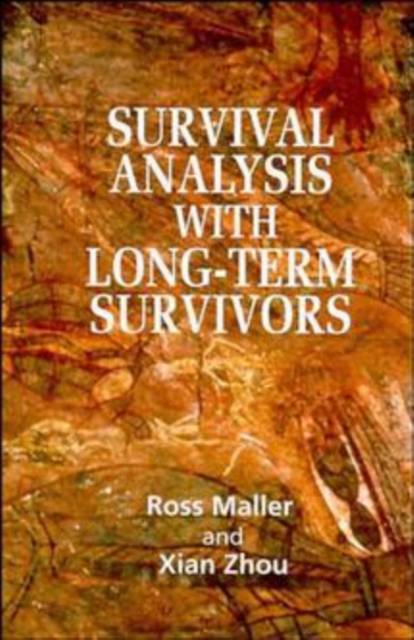
The aim of this book is to suggest and exemplify a systematic methodology for analysing survival data which contains "immune", or "cured" individuals, denoted generically as "long-term survivors". Such data occurs in medical and epidemiological applications, where the intention may be to identify whether or not cured or immune individuals are present in a population, perhaps as a result of treatments given; in the analysis of recidivism data in criminology, where the intentions are similar with respect to prisoners released from and possibly returning to prison; and in many other areas where followup data is available on individuals, with the possibility that not all suffer the event under investigation. Both nonparametric and parametric methods are proposed and developed. The effects of covariate information can be assessed via a kind of generalised linear framework in the parametric analyses. The proposed methodologies are supported by asymptotic analyses and simulations of real situations. While these theoretical underpinnings are presented in reasonable rigour and detail, the book is aimed very much at the practitioner who wishes to analyse survival data with (or even without) immunes.
Specificaties
Betrokkenen
- Auteur(s):
- Uitgeverij:
Inhoud
- Aantal bladzijden:
- 304
- Taal:
- Engels
- Reeks:
- Reeksnummer:
- nr. 16
Eigenschappen
- Productcode (EAN):
- 9780471962014
- Verschijningsdatum:
- 23/01/1997
- Uitvoering:
- Hardcover
- Formaat:
- Genaaid
- Afmetingen:
- 156 mm x 240 mm
- Gewicht:
- 557 g


Alleen bij Standaard Boekhandel
+ 811 punten op je klantenkaart van Standaard Boekhandel
AANGERADEN


Beoordelingen
We publiceren alleen reviews die voldoen aan de voorwaarden voor reviews. Bekijk onze voorwaarden voor reviews.