


- Afhalen na 1 uur in een winkel met voorraad
- Gratis thuislevering in België vanaf € 30
- Ruim aanbod met 7 miljoen producten
- Afhalen na 1 uur in een winkel met voorraad
- Gratis thuislevering in België vanaf € 30
- Ruim aanbod met 7 miljoen producten





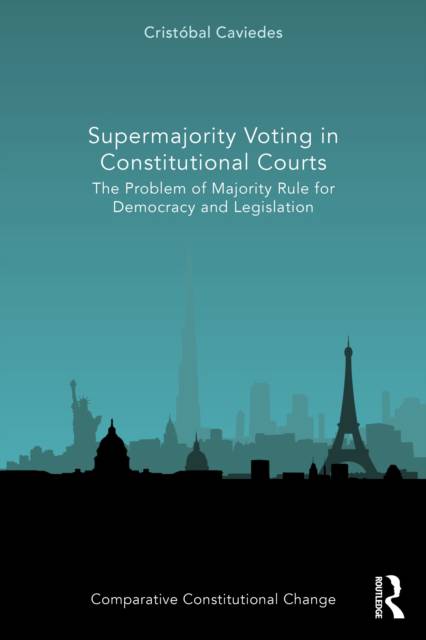
Supermajority Voting in Constitutional Courts
The Problem of Majority Rule for Democracy and Legislation
Cristóbal Caviedes
€ 86,95
+ 173 punten
Eenvoudig bestellen
Veilig betalen


Gratis thuislevering vanaf € 30 (via bpost)
Gratis levering in je Standaard Boekhandel
Omschrijving
This book questions the wide use of the majority voting rule in many constitutional courts to declare statutes unconstitutional, and argues that supermajority voting rules should be used instead. To declare statutes unconstitutional, it is argued that more than 50% of the judges present plus one judge present should be required.
Specificaties
Betrokkenen
- Auteur(s):
- Uitgeverij:
Inhoud
- Aantal bladzijden:
- 200
- Taal:
- Engels
- Reeks:
Eigenschappen
- Productcode (EAN):
- 9781032723976
- Verschijningsdatum:
- 26/12/2025
- Uitvoering:
- Paperback
- Formaat:
- Trade paperback (VS)
- Afmetingen:
- 156 mm x 234 mm
- Gewicht:
- 331 g


Alleen bij Standaard Boekhandel
+ 173 punten op je klantenkaart van Standaard Boekhandel
CADEAU

AANGERADEN


Beoordelingen
We publiceren alleen reviews die voldoen aan de voorwaarden voor reviews. Bekijk onze voorwaarden voor reviews.