



- Afhalen na 1 uur in een winkel met voorraad
- In januari gratis thuislevering in België
- Ruim aanbod met 7 miljoen producten
- Afhalen na 1 uur in een winkel met voorraad
- In januari gratis thuislevering in België
- Ruim aanbod met 7 miljoen producten





€ 48,95
+ 97 punten
Omschrijving
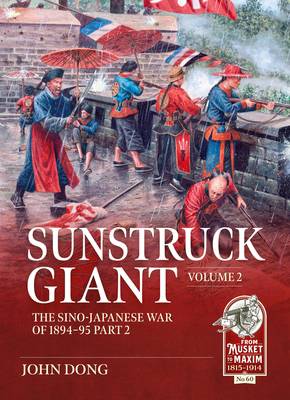
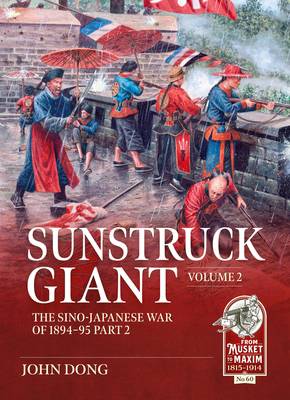
Utilising hitherto untranslated sources, volume two of Sunstruck Giant provides a complete campaign history of the First Sino-Japanese War of 1894-95, detailing not only the battles themselves but also the strategic motivations that shaped them. Six full-colour plates bring key engagements of the war to life with vivid authenticity.
Often depicted as the death-rattle of one empire and the ascendancy of another, the First Sino-Japanese War is commonly framed as a stark contrast between a "backward" China and a fully modernised Japan. This nationalism-tinted lens has led many accounts to gloss over the redeeming qualities of the Chinese military while downplaying the serious shortcomings of the Japanese. Drawing on previously untranslated sources, Sunstruck Giant is the first English-language work to offer a genuinely comprehensive and balanced view of both sides in this neglected conflict.
Existing English-language histories rely almost exclusively on Japanese sources, omitting the invaluable Chinese perspective and often excluding facts less creditable to the Japanese side. Sunstruck Giant therefore examines "the other side of the hill," analysing the successes, failures, mistakes, and misfortunes of both belligerents. Far from being uniformly "backward," Chinese forces demonstrated moments of genuine heroism, while the supposedly "modernised" Japanese were far from immune to grave and costly blunders.
Often depicted as the death-rattle of one empire and the ascendancy of another, the First Sino-Japanese War is commonly framed as a stark contrast between a "backward" China and a fully modernised Japan. This nationalism-tinted lens has led many accounts to gloss over the redeeming qualities of the Chinese military while downplaying the serious shortcomings of the Japanese. Drawing on previously untranslated sources, Sunstruck Giant is the first English-language work to offer a genuinely comprehensive and balanced view of both sides in this neglected conflict.
Existing English-language histories rely almost exclusively on Japanese sources, omitting the invaluable Chinese perspective and often excluding facts less creditable to the Japanese side. Sunstruck Giant therefore examines "the other side of the hill," analysing the successes, failures, mistakes, and misfortunes of both belligerents. Far from being uniformly "backward," Chinese forces demonstrated moments of genuine heroism, while the supposedly "modernised" Japanese were far from immune to grave and costly blunders.
Specificaties
Betrokkenen
- Auteur(s):
- Uitgeverij:
Inhoud
- Aantal bladzijden:
- 438
- Taal:
- Engels
- Reeks:
Eigenschappen
- Productcode (EAN):
- 9781806721535
- Verschijningsdatum:
- 18/03/2026
- Uitvoering:
- Paperback
- Formaat:
- Trade paperback (VS)
- Afmetingen:
- 180 mm x 249 mm
- Gewicht:
- 1160 g


Alleen bij Standaard Boekhandel
+ 97 punten op je klantenkaart van Standaard Boekhandel
Cadeau

AANGERADEN


Beoordelingen
We publiceren alleen reviews die voldoen aan de voorwaarden voor reviews. Bekijk onze voorwaarden voor reviews.