


- Afhalen na 1 uur in een winkel met voorraad
- Gratis thuislevering in België vanaf € 30
- Ruim aanbod met 7 miljoen producten
- Afhalen na 1 uur in een winkel met voorraad
- Gratis thuislevering in België vanaf € 30
- Ruim aanbod met 7 miljoen producten





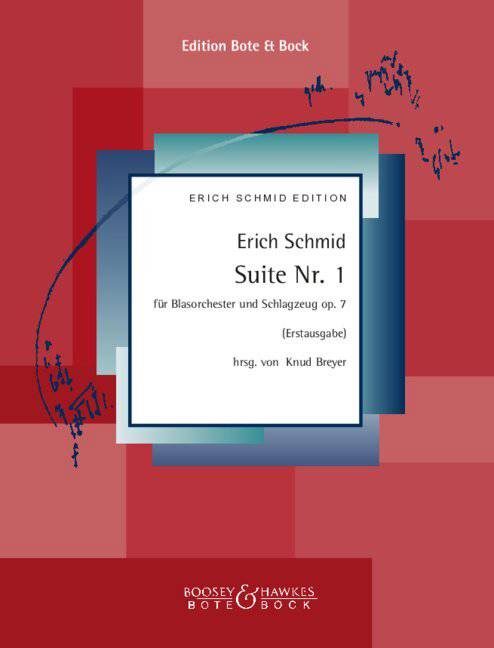
Suite Nr. 1
für Blasorchester und Schlagzeug. Vol. IX. op. 7. wind band and percussion. Partition.
€ 56,00
+ 112 punten
Omschrijving
Erich Schmid (1907 - 2000) was an orchestra conductor, choir director and university lecturer who promoted world premieres and radio broadcasts of contemporary music in Switzerland. He himself studied with Bernhard Sekles, among others, then with Arnold Schönberg and followed the aesthetics of the New Viennese School in his compositions. The historical-critical Erich Schmid Edition publishes for the first time all sixteen opus-numbered works as well as three additional piano works.
Suite No. 1 is an interesting hybrid that conveys the most modern compositional structure in the genre of light music. Schmid composed it shortly after the end of his year as a master student of Schönberg in Berlin. Like his other works of the time, its unusual instrumentation already shows an effort to move on from classical “high forms” and compose in looser structures, with the free use of the twelve-tone technique providing inner coherence. "Dance", "Waltz", "March" are linked by two inserted "Intermezzi" and introduced by an "Introduction". Not all movements require full instrumentation and are designed for solo rather than group performance. Professional playing techniques such as flutter tonguing and alienating sound effects through damping and muting are used.
Instrumentation:
wind band and percussion
op. 7
Suite No. 1 is an interesting hybrid that conveys the most modern compositional structure in the genre of light music. Schmid composed it shortly after the end of his year as a master student of Schönberg in Berlin. Like his other works of the time, its unusual instrumentation already shows an effort to move on from classical “high forms” and compose in looser structures, with the free use of the twelve-tone technique providing inner coherence. "Dance", "Waltz", "March" are linked by two inserted "Intermezzi" and introduced by an "Introduction". Not all movements require full instrumentation and are designed for solo rather than group performance. Professional playing techniques such as flutter tonguing and alienating sound effects through damping and muting are used.
Instrumentation:
wind band and percussion
op. 7
Specificaties
Betrokkenen
- Uitgeverij:
Inhoud
- Aantal bladzijden:
- 92
- Reeks:
Eigenschappen
- Productcode (EAN):
- 9783793142485
- Verschijningsdatum:
- 19/04/2023
- Afmetingen:
- 231 mm x 303 mm
- Gewicht:
- 355 g

Alleen bij Standaard Boekhandel
+ 112 punten op je klantenkaart van Standaard Boekhandel
Cadeau

AANGERADEN


Beoordelingen
We publiceren alleen reviews die voldoen aan de voorwaarden voor reviews. Bekijk onze voorwaarden voor reviews.