


- Afhalen na 1 uur in een winkel met voorraad
- Gratis thuislevering in België vanaf € 30
- Ruim aanbod met 7 miljoen producten
- Afhalen na 1 uur in een winkel met voorraad
- Gratis thuislevering in België vanaf € 30
- Ruim aanbod met 7 miljoen producten





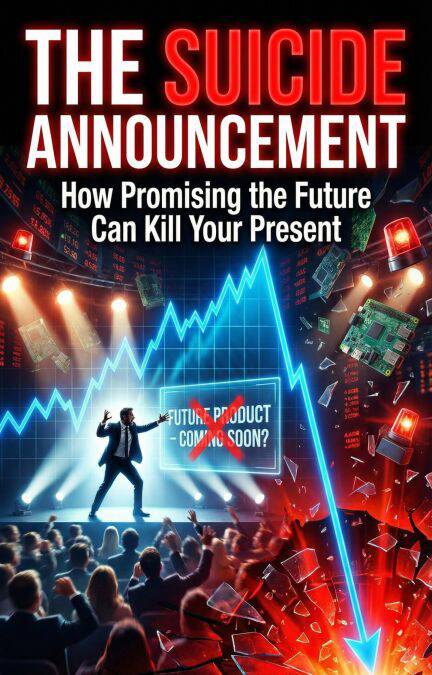
Suicide Announcement E-BOOK
How Promising the Future Can Kill Your Present
Gerald Moore
E-book | Engels
€ 4,99
+ 4 punten
Omschrijving
In 1983, Adam Osborne stood on a stage and bragged about his company's next computer. It was going to be faster, better, and cheaper than the current model. The audience loved it. They loved it so much that they stopped buying the current model immediately, waiting for the new one. The problem? The new one wasn't ready. Cash flow dried up, inventory piled up, and the company went bankrupt.
This is the "Osborne Effect"—the act of unintentionally destroying your own business by announcing a future product too early. This book analyzes the history of corporate self-sabotage, from the Sega Saturn launch to the decline of auto manufacturers who tease EVs years in advance.
It is a study in the delicate art of timing. How do you build hype without killing current sales? How do you manage the "innovator's dilemma" without falling into the "marketing suicide trap"? A crucial read for founders and marketers on the dangers of letting your mouth run faster than your supply chain.
This is the "Osborne Effect"—the act of unintentionally destroying your own business by announcing a future product too early. This book analyzes the history of corporate self-sabotage, from the Sega Saturn launch to the decline of auto manufacturers who tease EVs years in advance.
It is a study in the delicate art of timing. How do you build hype without killing current sales? How do you manage the "innovator's dilemma" without falling into the "marketing suicide trap"? A crucial read for founders and marketers on the dangers of letting your mouth run faster than your supply chain.
Specificaties
Betrokkenen
- Auteur(s):
- Uitgeverij:
Inhoud
- Aantal bladzijden:
- 187
- Taal:
- Engels
Eigenschappen
- Productcode (EAN):
- 9783565260850
- Verschijningsdatum:
- 19/02/2026
- Uitvoering:
- E-book
- Formaat:
- ePub



Alleen bij Standaard Boekhandel
+ 4 punten op je klantenkaart van Standaard Boekhandel
Cadeau

AANGERADEN


Beoordelingen
We publiceren alleen reviews die voldoen aan de voorwaarden voor reviews. Bekijk onze voorwaarden voor reviews.