



Bedankt voor het vertrouwen het afgelopen jaar! Om jou te bedanken bieden we GRATIS verzending (in België) aan op alles gedurende de hele maand januari.
- Afhalen na 1 uur in een winkel met voorraad
- In januari gratis thuislevering in België
- Ruim aanbod met 7 miljoen producten
Bedankt voor het vertrouwen het afgelopen jaar! Om jou te bedanken bieden we GRATIS verzending (in België) aan op alles gedurende de hele maand januari.
- Afhalen na 1 uur in een winkel met voorraad
- In januari gratis thuislevering in België
- Ruim aanbod met 7 miljoen producten





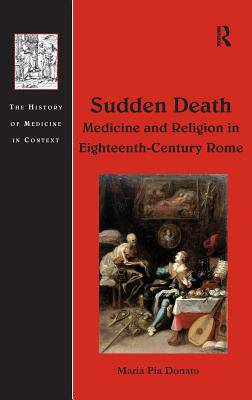
Sudden Death: Medicine and Religion in Eighteenth-Century Rome
Maria Pia Donato
€ 320,95
+ 641 punten
Omschrijving
In 1705-1706, during the War of the Spanish Succession and two years after a devastating earthquake, an 'epidemic' of mysterious sudden deaths terrorized Rome. In early modern society, a sudden death was perceived as a mala mors because it threatened the victim's salvation by hindering repentance and last confession. Special masses were celebrated to implore God's clemency and Pope Clement XI ordered his personal physician, Giovanni Maria Lancisi, to perform a series of dissections in the university anatomical theatre in order to discover the 'true causes' of the deadly events. It was the first investigation of this kind ever to take place for a condition which was not contagious. The book that Lancisi published on this topic, De subitaneis mortibus ('On Sudden Deaths', 1707), is one of the earliest modern scientific investigations of death; it was not only an accomplished example of mechanical philosophy as applied to the life sciences in eighteenth-century Europe, but also heralded a new pathological anatomy (traditionally associated with Giambattista Morgagni). Moreover, Lancisi's tract and the whole affair of the sudden deaths in Rome marked a significant break in the traditional attitude towards dying, introducing a more active approach that would later develop into the practice of resuscitation medicine. Sudden Death explores how a new scientific interpretation of death and a new attitude towards dying first came into being, breaking free from the Hippocratic tradition, which regarded death as the obvious limit of physician's capacity, and leading the way to a belief in the 'conquest of death' by medicine which remains in force to this day.
Specificaties
Betrokkenen
- Auteur(s):
- Uitgeverij:
Inhoud
- Aantal bladzijden:
- 240
- Taal:
- Engels
- Reeks:
Eigenschappen
- Productcode (EAN):
- 9781472418739
- Verschijningsdatum:
- 18/03/2016
- Uitvoering:
- Hardcover
- Formaat:
- Genaaid
- Afmetingen:
- 156 mm x 234 mm
- Gewicht:
- 517 g


Alleen bij Standaard Boekhandel
+ 641 punten op je klantenkaart van Standaard Boekhandel
SOLDEN


Beoordelingen
We publiceren alleen reviews die voldoen aan de voorwaarden voor reviews. Bekijk onze voorwaarden voor reviews.