


- Afhalen na 1 uur in een winkel met voorraad
- Gratis thuislevering in België vanaf € 30
- Ruim aanbod met 7 miljoen producten
- Afhalen na 1 uur in een winkel met voorraad
- Gratis thuislevering in België vanaf € 30
- Ruim aanbod met 7 miljoen producten




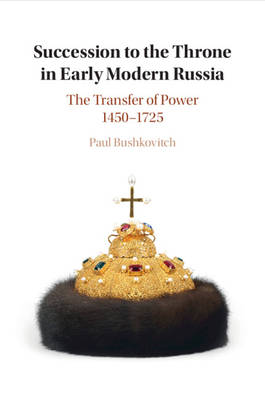
Succession to the Throne in Early Modern Russia
The Transfer of Power 1450–1725
Paul Bushkovitch
Paperback | Engels
€ 50,45
Omschrijving
This revisionist history of succession to the throne in early modern Russia, from the Moscow princes of the fifteenth century to Peter the Great, argues that legal primogeniture never existed: the monarch designated an heir that was usually the eldest son only by custom, not by law. Overturning generations of scholarship, Paul Bushkovitch persuasively demonstrates the many paths to succession to the throne, where designation of the heir and occasional elections were part of the relations of the monarch with the ruling elite, and to some extent the larger population. Exploring how the forms of designation evolved over the centuries as Russian culture changed, and in the later seventeenth century made use of Western practices, this study shows how, when Peter the Great finally formalized the custom in 1722 by enshrining the power of the tsar to designate in law, this was not a radical innovation but was in fact consistent with the experience of the previous centuries.
Specificaties
Betrokkenen
- Auteur(s):
- Uitgeverij:
Inhoud
- Aantal bladzijden:
- 414
- Taal:
- Engels
Eigenschappen
- Productcode (EAN):
- 9781108749688
- Verschijningsdatum:
- 30/05/2024
- Uitvoering:
- Paperback
- Formaat:
- Trade paperback (VS)
- Afmetingen:
- 152 mm x 229 mm
- Gewicht:
- 548 g


Alleen bij Standaard Boekhandel
Cadeau

AANGERADEN


Beoordelingen
We publiceren alleen reviews die voldoen aan de voorwaarden voor reviews. Bekijk onze voorwaarden voor reviews.