


- Afhalen na 1 uur in een winkel met voorraad
- Gratis thuislevering in België vanaf € 30
- Ruim aanbod met 7 miljoen producten
- Afhalen na 1 uur in een winkel met voorraad
- Gratis thuislevering in België vanaf € 30
- Ruim aanbod met 7 miljoen producten





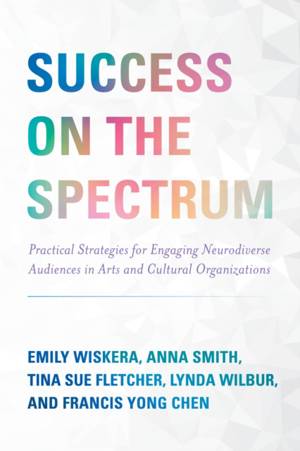
Success on the Spectrum
Practical Strategies for Engaging Neurodiverse Audiences in Arts and Cultural Organizations
Emily Wiskera, Anna Smith, Tina Sue Fletcher, Lynda Wilbur, Francis Yong Chen
Hardcover | Engels
€ 228,95
+ 457 punten
Uitvoering
Omschrijving
The role of arts and cultural institutions is changing. Once viewed as stewards of objects, institutions are increasingly upheld as stewards of people--spaces where the diversity of human experience is asserted, explored, and celebrated. As such, they function as public resources and should be equally accessible to all members of diverse communities.Individuals with autism spectrum disorder account for a significant portion of the community. Advocates are working to shift attitudes and nomenclature, with terms such as neurodiversity and sensory-friendly becoming more commonplace. With this, cultural institutions are putting effort into creating tailored programs and resources to welcome neurodiverse visitors who have historically been excluded from these spaces. Despite their desire to connect, many cultural workers fear they lack the expertise or resources needed to effectively create inclusive spaces and experiences.This book's content is presented by museum educators, arts administrators, occupational therapists, and school psychologists--contributors with different expertise and perspectives on the stakes of cultural arts experiences for neurodiverse visitors.We offer advice based on what has worked for us and share the sometimes-difficult lessons learned along the way. However, this advice comes with the caution there is no one-size-fits-all solution. To be truly successful, arts and cultural institutions must respond to their unique community and work within the resources and limitations of their institution.Our practical goals for the reader are threefold: To understand the value of programming for neurodiverse visitors and effectively communicate this to others, To build a toolkit of strategies and resources for neurodiverse visitors to have successful visits to cultural institutions, no matter the staff size, budget, or current stages of accessibility, To develop evaluation strategies to gauge the impact of offerings for neurodiverse visitors with results that help the reader improve, grow, and refine for the future.
Specificaties
Betrokkenen
- Auteur(s):
- Uitgeverij:
Inhoud
- Aantal bladzijden:
- 310
- Taal:
- Engels
Eigenschappen
- Productcode (EAN):
- 9781538171011
- Verschijningsdatum:
- 06/02/2024
- Uitvoering:
- Hardcover
- Formaat:
- Genaaid
- Afmetingen:
- 152 mm x 229 mm
- Gewicht:
- 585 g


Alleen bij Standaard Boekhandel
+ 457 punten op je klantenkaart van Standaard Boekhandel
Cadeau

AANGERADEN


Beoordelingen
We publiceren alleen reviews die voldoen aan de voorwaarden voor reviews. Bekijk onze voorwaarden voor reviews.