


- Afhalen na 1 uur in een winkel met voorraad
- Gratis thuislevering in België vanaf € 30
- Ruim aanbod met 7 miljoen producten
- Afhalen na 1 uur in een winkel met voorraad
- Gratis thuislevering in België vanaf € 30
- Ruim aanbod met 7 miljoen producten





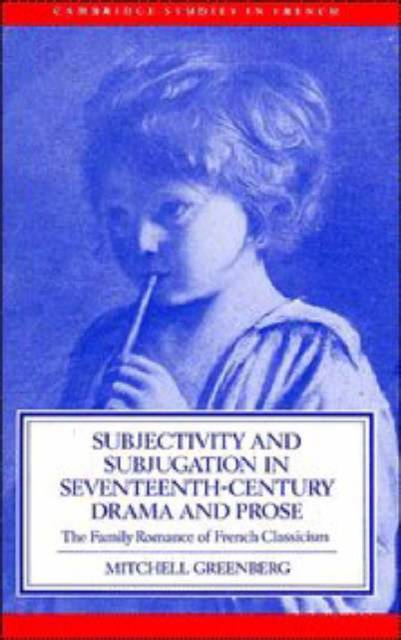
Subjectivity and Subjugation in Seventeenth-Century Drama and Prose
The Family Romance of French Classicism
Mitchell Greenberg
€ 187,45
+ 374 punten
Uitvoering
Omschrijving
This book analyzes the relationship between an emergent modern subjectivity in seventeenth-century French literature, particularly in dramatic works, and the contemporaneous evolution of the absolutist state. It shows how major writers of the Classical period (Corneille, Racine, Moliere, Lafayette) elaborate a new subject in and through their representations of the family, and argues that the family serves as the mediating locus of a patriarchal ideology of sexual and political containment. Professor Greenberg argues that this reflects the conflicting social, political and economic forces that were shifting European society away from the universe of the Renaissance and guiding it toward the "transparency" of Classical representation.
Specificaties
Betrokkenen
- Auteur(s):
- Uitgeverij:
Inhoud
- Aantal bladzijden:
- 256
- Taal:
- Engels
- Reeks:
- Reeksnummer:
- nr. 36
Eigenschappen
- Productcode (EAN):
- 9780521412933
- Verschijningsdatum:
- 25/09/1992
- Uitvoering:
- Hardcover
- Formaat:
- Genaaid
- Afmetingen:
- 140 mm x 216 mm
- Gewicht:
- 471 g


Alleen bij Standaard Boekhandel
+ 374 punten op je klantenkaart van Standaard Boekhandel
Cadeau

AANGERADEN


Beoordelingen
We publiceren alleen reviews die voldoen aan de voorwaarden voor reviews. Bekijk onze voorwaarden voor reviews.