


- Afhalen na 1 uur in een winkel met voorraad
- Gratis thuislevering in België vanaf € 30
- Ruim aanbod met 7 miljoen producten
- Afhalen na 1 uur in een winkel met voorraad
- Gratis thuislevering in België vanaf € 30
- Ruim aanbod met 7 miljoen producten




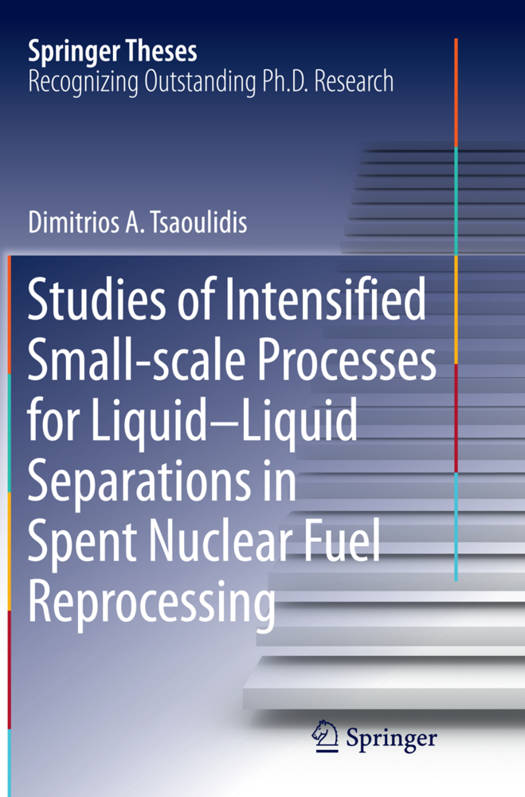
Studies of Intensified Small-Scale Processes for Liquid-Liquid Separations in Spent Nuclear Fuel Reprocessing
Dimitrios Tsaoulidis
€ 106,95
+ 213 punten
Uitvoering
Omschrijving
The present work focuses on the development of intensified small-scale extraction units for spent nuclear fuel reprocessing using advanced process engineering with combined experimental and modelling methodologies. It discusses a number of novel elements, such as the intensification of spent fuel reprocessing and the use of ionic liquids as green alternatives to organic solvents. The use of ionic liquids in two-phase liquid-liquid separation is new to the Multiphase Flow community, and has proved to be challenging, especially in small channels, because of the surface and interfacial properties involved, which are very different to those of common organic solvents. Numerical studies have been also performed to couple the hydrodynamics at small scale with the mass transfer. The numerical results, taken together with scale-up studies, are used to evaluate the applicability of the small-scale units in reprocessing large volumes of nuclear waste.
Specificaties
Betrokkenen
- Auteur(s):
- Uitgeverij:
Inhoud
- Aantal bladzijden:
- 170
- Taal:
- Engels
- Reeks:
Eigenschappen
- Productcode (EAN):
- 9783319374161
- Verschijningsdatum:
- 22/10/2016
- Uitvoering:
- Paperback
- Formaat:
- Trade paperback (VS)
- Afmetingen:
- 156 mm x 234 mm
- Gewicht:
- 276 g


Alleen bij Standaard Boekhandel
+ 213 punten op je klantenkaart van Standaard Boekhandel
AANGERADEN


Beoordelingen
We publiceren alleen reviews die voldoen aan de voorwaarden voor reviews. Bekijk onze voorwaarden voor reviews.