


- Afhalen na 1 uur in een winkel met voorraad
- Gratis thuislevering in België vanaf € 30
- Ruim aanbod met 7 miljoen producten
- Afhalen na 1 uur in een winkel met voorraad
- Gratis thuislevering in België vanaf € 30
- Ruim aanbod met 7 miljoen producten





€ 67,95
+ 135 punten
Omschrijving
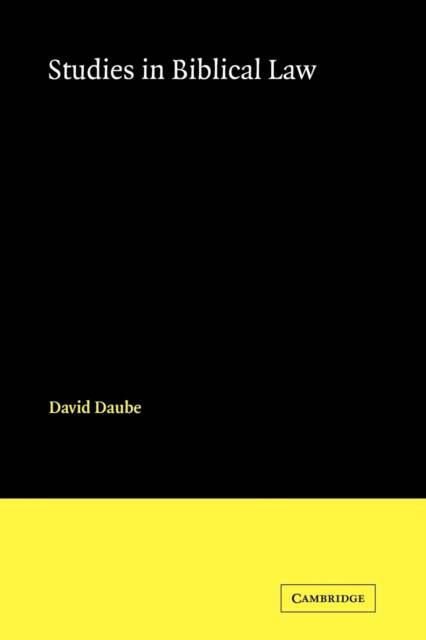
David Daube (1909-1999) was an eminent authority on Talmudic, Roman and ancient law, who taught legal history and jurisprudence at Cambridge, Aberdeen, Oxford and Berkeley. He was also in the vanguard of scholars who established the importance of Jewish and Talmudic perspectives to the understanding of the New Testament. This book, first published in 1947 and now reissued, contains five ground-breaking essays on the legal issues present in a number of Old Testament narratives including the story of Joseph and his brothers. Among the topics discussed are theft, deception, evidence, liability and punishment. These are set in the wider context of the growth of codes in the Pentateuch, Rabbinic interpretations of the Torah, and Roman sources including Macrobius and Gaius. Daube's book will resonate afresh in the scholarly climate of the twenty-first century, where the relationships between law and religion and between Judaism and Christianity are again the subject of lively debate.
Specificaties
Betrokkenen
- Auteur(s):
- Uitgeverij:
Inhoud
- Aantal bladzijden:
- 340
- Taal:
- Engels
Eigenschappen
- Productcode (EAN):
- 9780521089722
- Verschijningsdatum:
- 06/11/2008
- Uitvoering:
- Paperback
- Formaat:
- Trade paperback (VS)
- Afmetingen:
- 152 mm x 229 mm
- Gewicht:
- 498 g


Alleen bij Standaard Boekhandel
+ 135 punten op je klantenkaart van Standaard Boekhandel
Cadeau

AANGERADEN


Beoordelingen
We publiceren alleen reviews die voldoen aan de voorwaarden voor reviews. Bekijk onze voorwaarden voor reviews.