


- Afhalen na 1 uur in een winkel met voorraad
- Gratis thuislevering in België vanaf € 30
- Ruim aanbod met 7 miljoen producten
- Afhalen na 1 uur in een winkel met voorraad
- Gratis thuislevering in België vanaf € 30
- Ruim aanbod met 7 miljoen producten





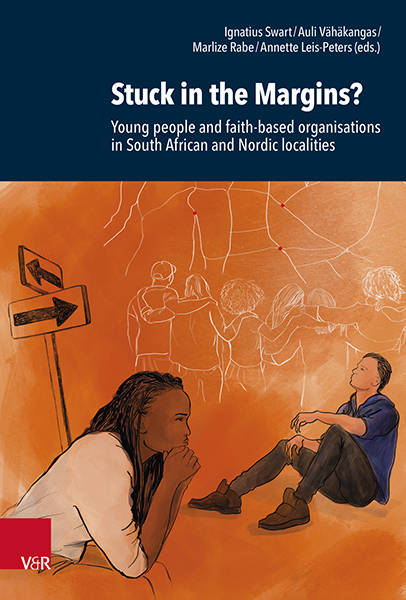
Stuck in the Margins?
Young People and Faith-Based Organisations in South African and Nordic Localities
€ 108,45
+ 216 punten
Omschrijving
This book is the product of a South African - Nordic research collaboration that wanted to gain deeper insight into the role that faith-based organizations (FBOs) play in the lives of young people eking out a living from the margins of society. The book as such distinguishes itself as a first major international scholarly endeavor to explore the contemporary phenomenon of youth marginalization from a concerted interdisciplinary faith-based organizational interest. While the exploration of concepts such as NEET (an acronym for young people not in education, employment or training), social cohesion and FBOs constitutes an important point of departure, the book's essential contribution lies in the empirical work undertaken. In six case studies, conducted respectively in locations in South Africa, Finland and Norway, the authors make a deliberate attempt to give a voice to the young people with whom interviews were conducted. The result is a scholarly work that in its discussions and conclusions is both critical and appreciative of the involvement of FBOs in the lives of marginalized youths but also the research achievement itself. Perspectives that recognize the meaningful presence of FBOs in the lives and lived religion of many young people at the margins are presented, while authors do not shy away either from highlighting the shortcomings of FBOs to work more purposefully with young people in overcoming the conditions conducive to their marginalization. Ultimately, however, this book does not confine itself to a critical perspective on FBOs alone but through the contribution of some of its authors present illuminating insight into what may still be required from the point of view of academic research to participate in larger liberative practices involving young people but also FBOs at the margins of society.
Specificaties
Betrokkenen
- Uitgeverij:
Inhoud
- Aantal bladzijden:
- 357
- Taal:
- Engels
- Reeks:
- Reeksnummer:
- nr. 31
Eigenschappen
- Productcode (EAN):
- 9783525568552
- Verschijningsdatum:
- 6/12/2021
- Uitvoering:
- Hardcover
- Formaat:
- Genaaid
- Afmetingen:
- 154 mm x 230 mm
- Gewicht:
- 715 g

Alleen bij Standaard Boekhandel
+ 216 punten op je klantenkaart van Standaard Boekhandel
Cadeau

AANGERADEN


Beoordelingen
We publiceren alleen reviews die voldoen aan de voorwaarden voor reviews. Bekijk onze voorwaarden voor reviews.