


- Afhalen na 1 uur in een winkel met voorraad
- Gratis thuislevering in België vanaf € 30
- Ruim aanbod met 7 miljoen producten
- Afhalen na 1 uur in een winkel met voorraad
- Gratis thuislevering in België vanaf € 30
- Ruim aanbod met 7 miljoen producten





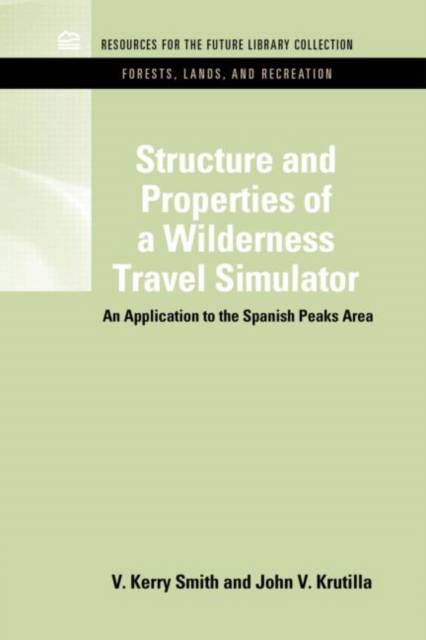
Structure and Properties of a Wilderness Travel Simulator
An Application to the Spanish Peaks Area
V Kerry Smith, John V Krutilla
€ 177,45
+ 354 punten
Omschrijving
First Published in 2011. This is Volume 10 of in a set of ten titles on Resources for the Future Library Collection Forests, Lands and Recreation. The research on which this monograph is based was stimulated by some ideas presented in George Stankey's A Strategy for the Definition and Management of Wilderness Quality and the conceptual model presented in a paper by Anthony Fisher and John Krutilla entitled, Determination of Optimal Capacity of Resource-Based Recreation Facilities. This study explores in an effort to develop operational means of determining optimal capacity of intended low-density recreation facilities was ( 1 ) to establish the empirical relation between the benefits enjoyed during a wilderness outing as a function, among other things, of the number of other parties encountered, and (2) a means of estimating the expected frequency of encounters as a function of the intensity of use of any wilderness area.
Specificaties
Betrokkenen
- Auteur(s):
- Uitgeverij:
Inhoud
- Aantal bladzijden:
- 194
- Taal:
- Engels
- Reeks:
Eigenschappen
- Productcode (EAN):
- 9781617260391
- Verschijningsdatum:
- 19/01/2011
- Uitvoering:
- Hardcover
- Formaat:
- Genaaid
- Afmetingen:
- 156 mm x 234 mm
- Gewicht:
- 449 g


Alleen bij Standaard Boekhandel
+ 354 punten op je klantenkaart van Standaard Boekhandel
Cadeau

AANGERADEN


Beoordelingen
We publiceren alleen reviews die voldoen aan de voorwaarden voor reviews. Bekijk onze voorwaarden voor reviews.