


- Afhalen na 1 uur in een winkel met voorraad
- Gratis thuislevering in België vanaf € 30
- Ruim aanbod met 7 miljoen producten
- Afhalen na 1 uur in een winkel met voorraad
- Gratis thuislevering in België vanaf € 30
- Ruim aanbod met 7 miljoen producten





€ 33,45
+ 66 punten
Uitvoering
Omschrijving
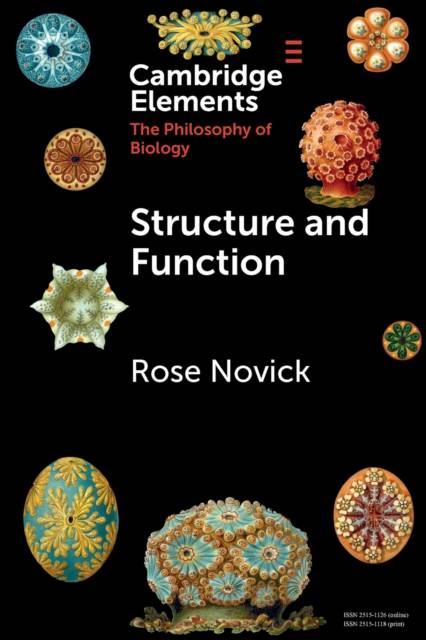
The history of biology is mottled with disputes between two distinct approaches to the organic world: structuralism and functionalism. Their persistence across radical theory change makes them difficult to characterize: the characterization must be abstract enough to capture biologists with diverse theoretical commitments, yet not so abstract as to be vacuous. This Element develops a novel account of structuralism and functionalism in terms of explanatory strategies (Section 2). This reveals the possibility of integrating the two strategies; the explanatory successes of evolutionary-developmental biology essentially depend on such integration (Section 3). Neither explanatory strategy is universally subordinate to the other, though subordination with respect to particular explanatory tasks is possible (Section 4). Beyond structuralism and functionalism, philosophical analysis that centers explanatory strategies can illuminate conflicts within evolutionary theory more generally (Section 5).
Specificaties
Betrokkenen
- Auteur(s):
- Uitgeverij:
Inhoud
- Aantal bladzijden:
- 88
- Taal:
- Engels
- Reeks:
Eigenschappen
- Productcode (EAN):
- 9781009013888
- Verschijningsdatum:
- 9/03/2023
- Uitvoering:
- Paperback
- Formaat:
- Trade paperback (VS)
- Afmetingen:
- 152 mm x 229 mm
- Gewicht:
- 127 g


Alleen bij Standaard Boekhandel
+ 66 punten op je klantenkaart van Standaard Boekhandel
AANGERADEN


Beoordelingen
We publiceren alleen reviews die voldoen aan de voorwaarden voor reviews. Bekijk onze voorwaarden voor reviews.