


- Afhalen na 1 uur in een winkel met voorraad
- Gratis thuislevering in België vanaf € 30
- Ruim aanbod met 7 miljoen producten
- Afhalen na 1 uur in een winkel met voorraad
- Gratis thuislevering in België vanaf € 30
- Ruim aanbod met 7 miljoen producten





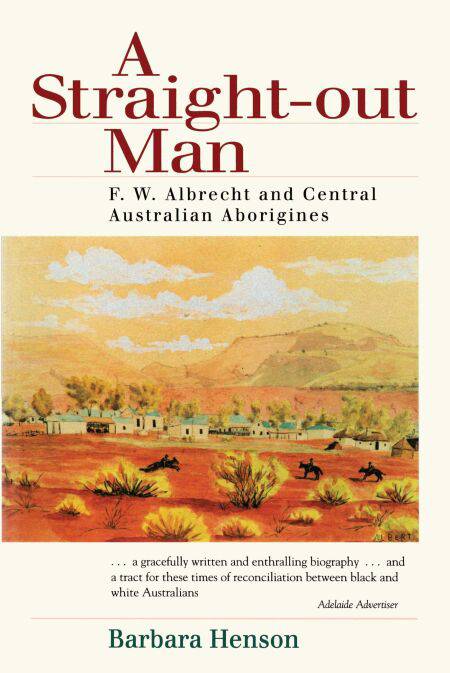
Straight-Out Man E-BOOK
F.W. Albrecht and Central Australian Aborigines
Barbara Henson
E-book | Engels
€ 14,53
+ 14 punten
Uitvoering
Omschrijving
Central Australia and its oldest mission, Hermannsburg, have long been a potent arena for the encounter between Australia's indigenous people and the European newcomers. The life of Hermannsburg's longest serving superintendent, F. W. Albrecht, vividly details much of that encounter, beginning in the 1920s when Aborigines were thought to be a dying race, with governments and public largely indifferent to their fate.
Described by some as Australia's greatest missionary, Albrecht battled to gain secure reserves on traditional lands, and to foster Aboriginal education, employment and leadership. Prominent figures crossed his path: Flynn of the Inland,T. G. H. Strehlow—and Albert Namatjira, in whose life and painting Albrecht played a key role.
Aboriginal recollections punctuate the story, providing a rare glimpse into Aboriginal thoughts and feelings for Albrecht himself and the events surrounding them. And at the centre is a man of great personal commitment, struggling with the painful unlearning of his own cultural certainties. This is subtle and compelling storytelling.
Described by some as Australia's greatest missionary, Albrecht battled to gain secure reserves on traditional lands, and to foster Aboriginal education, employment and leadership. Prominent figures crossed his path: Flynn of the Inland,T. G. H. Strehlow—and Albert Namatjira, in whose life and painting Albrecht played a key role.
Aboriginal recollections punctuate the story, providing a rare glimpse into Aboriginal thoughts and feelings for Albrecht himself and the events surrounding them. And at the centre is a man of great personal commitment, struggling with the painful unlearning of his own cultural certainties. This is subtle and compelling storytelling.
Specificaties
Betrokkenen
- Auteur(s):
- Uitgeverij:
Inhoud
- Aantal bladzijden:
- 348
- Taal:
- Engels
Eigenschappen
- Productcode (EAN):
- 9780522865394
- Verschijningsdatum:
- 17/10/2016
- Uitvoering:
- E-book
- Beveiligd met:
- Adobe DRM
- Formaat:
- ePub



Alleen bij Standaard Boekhandel
+ 14 punten op je klantenkaart van Standaard Boekhandel
AANGERADEN


Beoordelingen
We publiceren alleen reviews die voldoen aan de voorwaarden voor reviews. Bekijk onze voorwaarden voor reviews.