


- Afhalen na 1 uur in een winkel met voorraad
- Gratis thuislevering in België vanaf € 30
- Ruim aanbod met 7 miljoen producten
- Afhalen na 1 uur in een winkel met voorraad
- Gratis thuislevering in België vanaf € 30
- Ruim aanbod met 7 miljoen producten





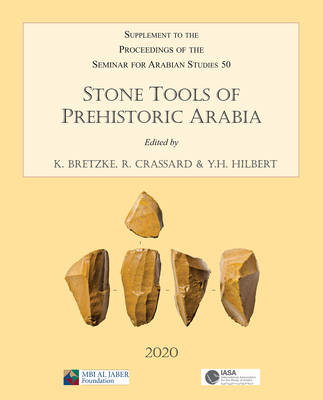
Stone Tools of Prehistoric Arabia
Papers from the Special Session of the Seminar for Arabian Studies Held on 21 July 2019: Supplement to the Proceedings of the Seminar for Arabian Studies Volume 50 2020
Yamandu H Hilbert
€ 40,95
+ 81 punten
Omschrijving
During the Seminar for Arabian Studies held in Leiden (July 2019), a special one-day session on the stone tools of prehistoric Arabia was held. Stone tools are generally associated with the oldest archaeological periods of human existence, the Palaeolithic, and are the most lasting vestiges of our ancestors' productive activities. In Arabia, stone tools (or lithics) are found on the deflated surfaces close to raw material outcrops, high on the top of mountains and deep within valleys and terraces, on lake relics at the heart of the many sand seas, and even under water. For a long time, however, stratified archaeological records were rare and developing chronological frameworks was therefore a challenge. The discoveries made by international archaeological projects conducted across Arabia in recent years have made vital contributions to the field; the archaeological investigation of human origins in the Arabian Peninsula and a better understanding of cultural diversification throughout prehistory are good examples. The interpretation of the new finds provides alternative scenarios for how prehistoric human populations interacted with the diverse landscapes of Arabia, suggesting the Peninsula was not merely a crossroads or superhighway of expansion for anatomically modern humans but also functioned as a human habitat throughout the Pleistocene. The present Supplement to Volume 50 of the Proceedings of the Seminar for Arabian Studies addresses these and many particularly emerging interests on the deep past of the Arabian Peninsula.
Specificaties
Betrokkenen
- Auteur(s):
- Uitgeverij:
Inhoud
- Aantal bladzijden:
- 205
- Taal:
- Engels
- Reeks:
Eigenschappen
- Productcode (EAN):
- 9781789697377
- Verschijningsdatum:
- 31/12/2020
- Uitvoering:
- Paperback
- Formaat:
- Trade paperback (VS)
- Afmetingen:
- 206 mm x 251 mm
- Gewicht:
- 657 g


Alleen bij Standaard Boekhandel
+ 81 punten op je klantenkaart van Standaard Boekhandel
Cadeau

AANGERADEN


Beoordelingen
We publiceren alleen reviews die voldoen aan de voorwaarden voor reviews. Bekijk onze voorwaarden voor reviews.