


- Afhalen na 1 uur in een winkel met voorraad
- Gratis thuislevering in België vanaf € 30
- Ruim aanbod met 7 miljoen producten
- Afhalen na 1 uur in een winkel met voorraad
- Gratis thuislevering in België vanaf € 30
- Ruim aanbod met 7 miljoen producten





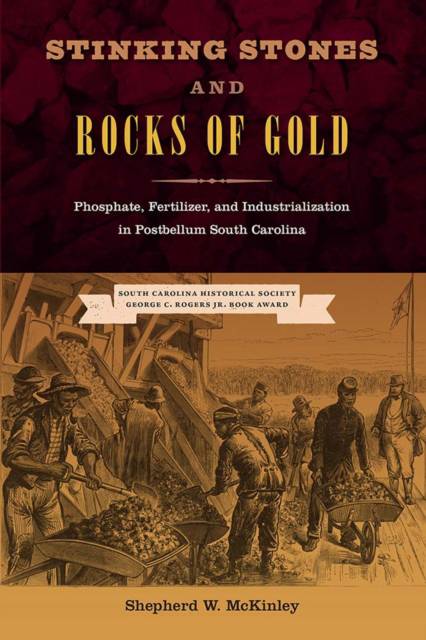
Stinking Stones and Rocks of Gold
Phosphate, Fertilizer, and Industrialization in Postbellum South Carolina
Shepherd W McKinley
€ 106,95
+ 213 punten
Uitvoering
Omschrijving
In the first book ever written about the impact of phosphate mining on the South Carolina plantation economy, Shepherd McKinley explains how the convergence of the phosphate and fertilizer industries carried long-term impacts for America and the South.
Fueling the rapid growth of lowcountry fertilizer companies, phosphate mining provided elite plantation owners a way to stem losses from emancipation. At the same time, mining created an autonomous alternative to sharecropping, enabling freed people to extract housing and labor concessions.
Stinking Stones and Rocks of Gold develops an overarching view of what can be considered one of many key factors in the birth of southern industry. This top-down, bottom-up history (business, labor, social, and economic) analyzes an alternative path for all peoples in the post-emancipation South.
Specificaties
Betrokkenen
- Auteur(s):
- Uitgeverij:
Inhoud
- Aantal bladzijden:
- 224
- Taal:
- Engels
- Reeks:
Eigenschappen
- Productcode (EAN):
- 9780813049243
- Verschijningsdatum:
- 18/03/2014
- Uitvoering:
- Hardcover
- Formaat:
- Genaaid
- Afmetingen:
- 155 mm x 231 mm
- Gewicht:
- 521 g


Alleen bij Standaard Boekhandel
+ 213 punten op je klantenkaart van Standaard Boekhandel
Cadeau

AANGERADEN


Beoordelingen
We publiceren alleen reviews die voldoen aan de voorwaarden voor reviews. Bekijk onze voorwaarden voor reviews.