


- Afhalen na 1 uur in een winkel met voorraad
- Gratis thuislevering in België vanaf € 30
- Ruim aanbod met 7 miljoen producten
- Afhalen na 1 uur in een winkel met voorraad
- Gratis thuislevering in België vanaf € 30
- Ruim aanbod met 7 miljoen producten





€ 139,95
+ 279 punten
Omschrijving
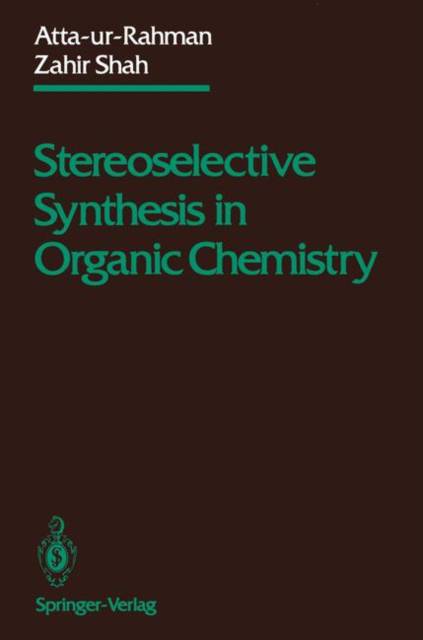
This monumental tome by Prof. Atta-ur-Rahman and Dr. Zahir Shah pres- ents a broad overall perspective of stereo selectivity in the synthesis of or- ganic molecules. Thus it treats a problem that is of fundamental importance and will be even more important in the future as the drug industry is required to supply 1000/0 optically pure compounds. After an exposition of general principles, the following subjects are treated: Catalytic Reductions, Heterogeneous Catalytic Hydrogenations, Stereoselective Non-Catalytic Reductions, Stereos elective Carbon-Carbon Bond Forming Reactions, Asymmetric Oxidations, Asymmetric Carbon- Heteroatom Bond Formations, Enzyme Catalyzed Reactions, Stereo- selective Free Radical Reactions, and finally Miscellaneous Stereoselective Reactions. For each subject, a wealth of examples are given. The highly selective reactions are mentioned along with reactions that are not. This is helpful as it will teach the practical chemist what to avoid. Much progress has been made in the last two decades in the design of new, very stereoselective reactions which can be applied in industry. For example, and in alphabetical order, we can mention (among other peers): H.C. Brown (hydroboration), D.C. Evans (carbon-carbon bond forma- tion), R. Noyori (BINAP reagents for hydrogenation), and K.B. Sharpless (epoxidation and dihydroxylation of double bonds). Thus the field has completely changed since the 1950s, when optically pure compounds were always obtained by difficult resolutions of racemates and not by stereoselec- tive reactions.
Specificaties
Betrokkenen
- Auteur(s):
- Uitgeverij:
Inhoud
- Aantal bladzijden:
- 522
- Taal:
- Engels
Eigenschappen
- Productcode (EAN):
- 9781461383291
- Verschijningsdatum:
- 21/12/2011
- Uitvoering:
- Paperback
- Formaat:
- Trade paperback (VS)
- Afmetingen:
- 156 mm x 234 mm
- Gewicht:
- 748 g


Alleen bij Standaard Boekhandel
+ 279 punten op je klantenkaart van Standaard Boekhandel
Cadeau

AANGERADEN


Beoordelingen
We publiceren alleen reviews die voldoen aan de voorwaarden voor reviews. Bekijk onze voorwaarden voor reviews.