



Je cadeautjes zeker op tijd in huis hebben voor de feestdagen? Kom langs in onze winkels en vind het perfecte geschenk!
- Afhalen na 1 uur in een winkel met voorraad
- Gratis thuislevering in België vanaf € 30
- Ruim aanbod met 7 miljoen producten
Je cadeautjes zeker op tijd in huis hebben voor de feestdagen? Kom langs in onze winkels en vind het perfecte geschenk!
- Afhalen na 1 uur in een winkel met voorraad
- Gratis thuislevering in België vanaf € 30
- Ruim aanbod met 7 miljoen producten





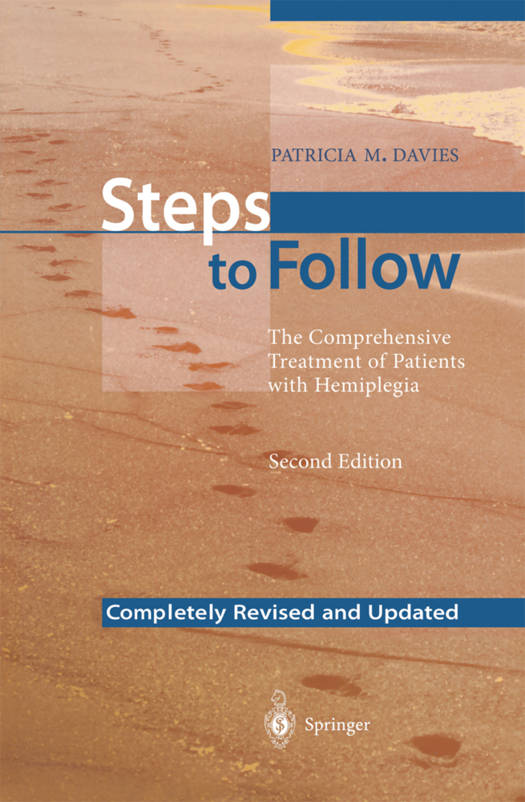
Steps to Follow
The Comprehensive Treatment of Patients with Hemiplegia
Patricia M Davies
Paperback | Engels
€ 132,45
+ 264 punten
Uitvoering
Omschrijving
A true paradigm shift is taking place in the field of neurology. Earlier it was regarded as the science of exact diagnosis of incurable illnesses, re- signed to the dogma that damage to the central nervous system could not be repaired: "Once development is complete, the sources of growth and regeneration ofaxons and dendrites are irretrievably lost. In the adult brain the nerve paths are fixed and immutable - everything can die, but nothing can be regenerated" (Cajal1928). Even then this could have been countered with what holds today: rehabilitation does not take place in the test tube, being supported only a short time later by an authoritative source, the professor of neurology and neurosurgery in Breslau, Otfried Foerster. He wrote a 100-page article about thera- peutic exercises which appeared in the Handbuch der Neurologie (also published by Springer-Verlag). The following sentences from his intro- duction illustrate his opinion of the importance of therapeutic exercises and areclose to our views today (Foerster 1936): "There is no doubt that most motor disturbances caused by lesions of the nervous system are more or less completely compensated as a re- sult of a tendency inherent to the organism to carry out as expedient- ly as possible the tasks of which it is capable under normal circum- stances, using all the forces still available to it with the remaining un- damaged parts of the nervous system, even following injury to its sub-
Specificaties
Betrokkenen
- Auteur(s):
- Uitgeverij:
Inhoud
- Aantal bladzijden:
- 514
- Taal:
- Engels
Eigenschappen
- Productcode (EAN):
- 9783540607205
- Verschijningsdatum:
- 8/05/2000
- Uitvoering:
- Paperback
- Formaat:
- Trade paperback (VS)
- Afmetingen:
- 155 mm x 231 mm
- Gewicht:
- 748 g


Alleen bij Standaard Boekhandel
+ 264 punten op je klantenkaart van Standaard Boekhandel
CADEAU


Beoordelingen
We publiceren alleen reviews die voldoen aan de voorwaarden voor reviews. Bekijk onze voorwaarden voor reviews.