


- Afhalen na 1 uur in een winkel met voorraad
- Gratis thuislevering in België vanaf € 30
- Ruim aanbod met 7 miljoen producten
- Afhalen na 1 uur in een winkel met voorraad
- Gratis thuislevering in België vanaf € 30
- Ruim aanbod met 7 miljoen producten





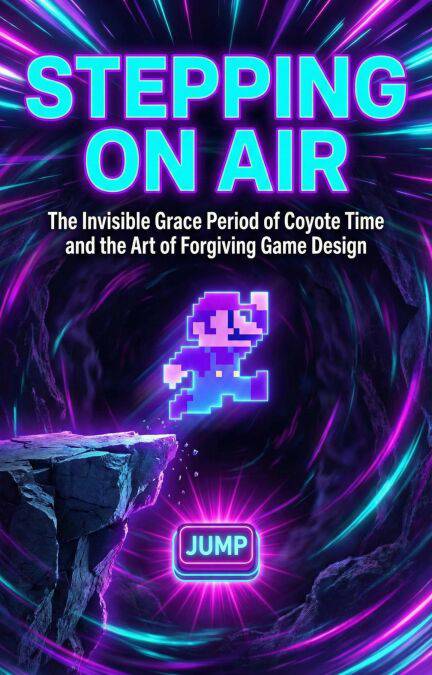
Stepping on Air E-BOOK
The Invisible Grace Period of Coyote Time and the Art of Forgiving Game Design
Matthew Harris
E-book | Engels
€ 4,99
+ 4 punten
Omschrijving
You are running towards a treacherous pit in a video game. You press the jump button a fraction of a second too late, your character's feet clearly running off the edge into empty space. Yet, magically, you still jump. You survive. This isn't a glitch; it is a meticulously engineered psychological safety net known among developers as "Coyote Time."
Named after the cartoon coyote who briefly floats in mid-air before plummeting, this invisible mechanic is the secret sauce behind the world's most beloved platformers. Human reaction times are imperfect, and strict, pixel-perfect physics often feel punishing and unfair to the player. By coding a hidden grace period—allowing the player to jump for a few milliseconds after leaving solid ground—developers create a seamless illusion of competence and fluid control.
This deep dive into the psychology of game design exposes the invisible tricks used to manipulate player frustration. It explores how developers bend the laws of digital physics, tweak hitboxes, and lie to the player in order to make the gameplay experience feel deeply satisfying rather than brutally realistic.
For aspiring game designers and curious gamers, this book reveals the hidden empathy built into your favorite titles. Discover how breaking the rules of physics is the ultimate key to achieving perfect, addictive gameplay.
Named after the cartoon coyote who briefly floats in mid-air before plummeting, this invisible mechanic is the secret sauce behind the world's most beloved platformers. Human reaction times are imperfect, and strict, pixel-perfect physics often feel punishing and unfair to the player. By coding a hidden grace period—allowing the player to jump for a few milliseconds after leaving solid ground—developers create a seamless illusion of competence and fluid control.
This deep dive into the psychology of game design exposes the invisible tricks used to manipulate player frustration. It explores how developers bend the laws of digital physics, tweak hitboxes, and lie to the player in order to make the gameplay experience feel deeply satisfying rather than brutally realistic.
For aspiring game designers and curious gamers, this book reveals the hidden empathy built into your favorite titles. Discover how breaking the rules of physics is the ultimate key to achieving perfect, addictive gameplay.
Specificaties
Betrokkenen
- Auteur(s):
- Uitgeverij:
Inhoud
- Aantal bladzijden:
- 149
- Taal:
- Engels
Eigenschappen
- Productcode (EAN):
- 9783565275069
- Verschijningsdatum:
- 25/02/2026
- Uitvoering:
- E-book
- Formaat:
- ePub


Alleen bij Standaard Boekhandel
+ 4 punten op je klantenkaart van Standaard Boekhandel
Cadeau

AANGERADEN


Beoordelingen
We publiceren alleen reviews die voldoen aan de voorwaarden voor reviews. Bekijk onze voorwaarden voor reviews.