


- Afhalen na 1 uur in een winkel met voorraad
- Gratis thuislevering in België vanaf € 30
- Ruim aanbod met 7 miljoen producten
- Afhalen na 1 uur in een winkel met voorraad
- Gratis thuislevering in België vanaf € 30
- Ruim aanbod met 7 miljoen producten





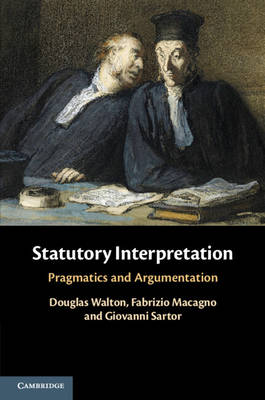
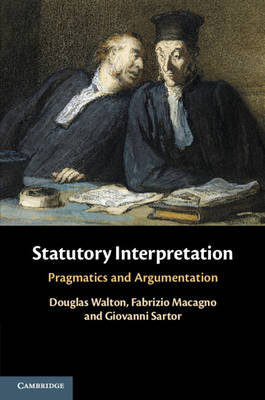
Statutory Interpretation
Pragmatics and Argumentation
Douglas Walton, Fabrizio Macagno, Giovanni Sartor
Paperback | Engels
€ 54,95
+ 109 punten
Omschrijving
Statutory interpretation involves the reconstruction of the meaning of a legal statement when it cannot be considered as accepted or granted. This phenomenon needs to be considered not only from the legal and linguistic perspective, but also from the argumentative one - which focuses on the strategies for defending a controversial or doubtful viewpoint. This book draws upon linguistics, legal theory, computing, and dialectics to present an argumentation-based approach to statutory interpretation. By translating and summarizing the existing legal interpretative canons into eleven patterns of natural arguments - called argumentation schemes - the authors offer a system of argumentation strategies for developing, defending, assessing, and attacking an interpretation. Illustrated through major cases from both common and civil law, this methodology is summarized in diagrams and maps for application to computer sciences. These visuals help make the structures, strategies, and vulnerabilities of legal reasoning accessible to both legal professionals and laypeople.
Specificaties
Betrokkenen
- Auteur(s):
- Uitgeverij:
Inhoud
- Aantal bladzijden:
- 346
- Taal:
- Engels
Eigenschappen
- Productcode (EAN):
- 9781108454070
- Verschijningsdatum:
- 25/08/2022
- Uitvoering:
- Paperback
- Formaat:
- Trade paperback (VS)
- Afmetingen:
- 152 mm x 229 mm
- Gewicht:
- 462 g


Alleen bij Standaard Boekhandel
+ 109 punten op je klantenkaart van Standaard Boekhandel
AANGERADEN


Beoordelingen
We publiceren alleen reviews die voldoen aan de voorwaarden voor reviews. Bekijk onze voorwaarden voor reviews.