


- Afhalen na 1 uur in een winkel met voorraad
- Gratis thuislevering in België vanaf € 30
- Ruim aanbod met 7 miljoen producten
- Afhalen na 1 uur in een winkel met voorraad
- Gratis thuislevering in België vanaf € 30
- Ruim aanbod met 7 miljoen producten





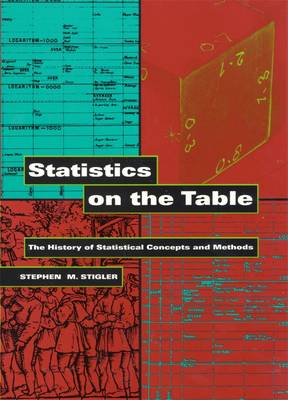
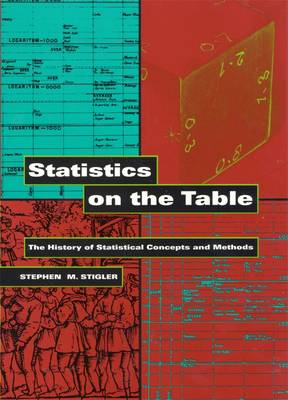
Statistics on the Table
The History of Statistical Concepts and Methods
Stephen M Stigler
Paperback | Engels
€ 48,95
+ 97 punten
Omschrijving
This lively collection of essays examines in witty detail the history of some of the concepts involved in bringing statistical argument "to the table," and some of the pitfalls that have been encountered. The topics range from seventeenth-century medicine and the circulation of blood, to the cause of the Great Depression and the effect of the California gold discoveries of 1848 upon price levels, to the determinations of the shape of the Earth and the speed of light, to the meter of Virgil's poetry and the prediction of the Second Coming of Christ. The title essay tells how the statistician Karl Pearson came to issue the challenge to put "statistics on the table" to the economists Marshall, Keynes, and Pigou in 1911. The 1911 dispute involved the effect of parental alcoholism upon children, but the challenge is general and timeless: important arguments require evidence, and quantitative evidence requires statistical evaluation. Some essays examine deep and subtle statistical ideas such as the aggregation and regression paradoxes; others tell of the origin of the Average Man and the evaluation of fingerprints as a forerunner of the use of DNA in forensic science. Several of the essays are entirely nontechnical; all examine statistical ideas with an ironic eye for their essence and what their history can tell us about current disputes.
Specificaties
Betrokkenen
- Auteur(s):
- Uitgeverij:
Inhoud
- Aantal bladzijden:
- 504
- Taal:
- Engels
Eigenschappen
- Productcode (EAN):
- 9780674009790
- Verschijningsdatum:
- 30/09/2002
- Uitvoering:
- Paperback
- Formaat:
- Trade paperback (VS)
- Afmetingen:
- 155 mm x 236 mm
- Gewicht:
- 562 g


Alleen bij Standaard Boekhandel
+ 97 punten op je klantenkaart van Standaard Boekhandel
CADEAU


Beoordelingen
We publiceren alleen reviews die voldoen aan de voorwaarden voor reviews. Bekijk onze voorwaarden voor reviews.