


- Afhalen na 1 uur in een winkel met voorraad
- Gratis thuislevering in België vanaf € 30
- Ruim aanbod met 7 miljoen producten
- Afhalen na 1 uur in een winkel met voorraad
- Gratis thuislevering in België vanaf € 30
- Ruim aanbod met 7 miljoen producten





€ 92,45
+ 184 punten
Omschrijving
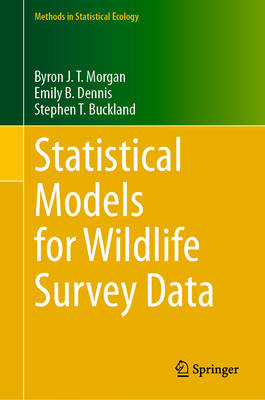
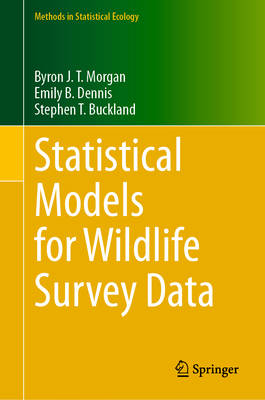
This book describes a range of models for ecological data sets using both classical and Bayesian methods of inference, and illustrates their use through a varied set of real examples. These examples exhibit a range of sampling schemes, applied to various taxa and in varying environmental conditions. The book also describes pitfalls to be avoided in the design and analysis of ecological surveys. Models may be spatial and/or temporal, and often include covariates such as measures of habitat, temperature and rainfall. Covariate selection for given problems is discussed. Other topics include the construction of individual species spatial maps, how spatial distributions change over time, models for unmarked and marked/identifiable individuals, integrated analysis, and how methods can be used to estimate biodiversity. In addition, the book reviews emerging new technologies; for instance, remote sensing and the use of drones, which result in opportunities for new methods of analysis. This book is a source of reference for postgraduates and research scientists in statistics and ecology. It may be used for graduate-level teaching, as well as a research reference. It critically and comprehensively presents the most up-to-date statistical modeling work in the area, recommending statistical methods. There is an extensive bibliography and multiple links to computer programs written in R, BUGS and other languages, as well as relevant computer packages; computing material may be accessed via download from the book website.
Specificaties
Betrokkenen
- Auteur(s):
- Uitgeverij:
Inhoud
- Aantal bladzijden:
- 448
- Taal:
- Engels
- Reeks:
Eigenschappen
- Productcode (EAN):
- 9783032061829
- Verschijningsdatum:
- 25/06/2026
- Uitvoering:
- Hardcover
- Formaat:
- Genaaid
- Afmetingen:
- 155 mm x 235 mm


Alleen bij Standaard Boekhandel
+ 184 punten op je klantenkaart van Standaard Boekhandel
Cadeau

AANGERADEN


Beoordelingen
We publiceren alleen reviews die voldoen aan de voorwaarden voor reviews. Bekijk onze voorwaarden voor reviews.