


- Afhalen na 1 uur in een winkel met voorraad
- Gratis thuislevering in België vanaf € 30
- Ruim aanbod met 7 miljoen producten
- Afhalen na 1 uur in een winkel met voorraad
- Gratis thuislevering in België vanaf € 30
- Ruim aanbod met 7 miljoen producten





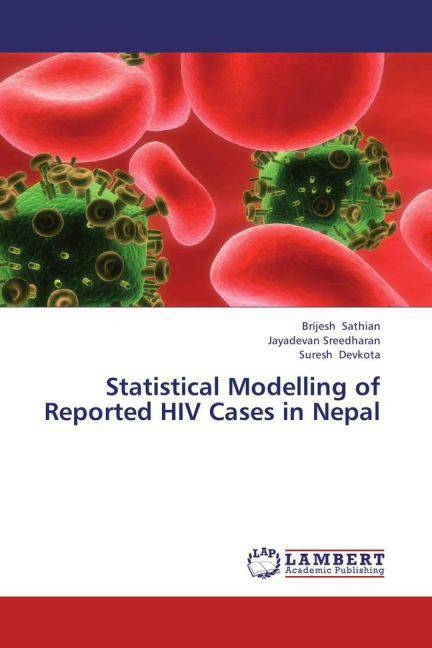
Statistical Modelling of Reported HIV Cases in Nepal
Brijesh Sathian, Jayadevan Sreedharan, Suresh Devkota
Paperback | Engels
€ 35,45
+ 70 punten
Omschrijving
The real state about the spread of the HIV epidemic in Nepal is not clear since the details available are on the basis of risk group. The objective of the study is to extract as much as information possible from available data and find out the trends of HIV cases in future. A retrospective study was carried out on the data collected from the Health ministry records of Nepal, between 1988 and 2004. Descriptive statistics and statistical modelling were used for the analysis and forecasting of data. Excluding the constant term from the equation, the cubic model was the best fit, for the forecasting of HIV cases. NCASC reported cumulative number of HIV cases up to 2009 differs from our projected cases by 46 (99.99% accuracy in prediction). Using cubic equation, it is estimated that 4773 males, 2163 females and 6936 total reported number of HIV cases will be there in Nepal by the year 2015. The HIV cases in Nepal are having an increasing trend.
Specificaties
Betrokkenen
- Auteur(s):
- Uitgeverij:
Inhoud
- Aantal bladzijden:
- 64
- Taal:
- Engels
Eigenschappen
- Productcode (EAN):
- 9783659383519
- Verschijningsdatum:
- 25/04/2013
- Uitvoering:
- Paperback
- Afmetingen:
- 150 mm x 220 mm
- Gewicht:
- 104 g


Alleen bij Standaard Boekhandel
+ 70 punten op je klantenkaart van Standaard Boekhandel
Cadeau

AANGERADEN


Beoordelingen
We publiceren alleen reviews die voldoen aan de voorwaarden voor reviews. Bekijk onze voorwaarden voor reviews.