


- Afhalen na 1 uur in een winkel met voorraad
- Gratis thuislevering in België vanaf € 30
- Ruim aanbod met 7 miljoen producten
- Afhalen na 1 uur in een winkel met voorraad
- Gratis thuislevering in België vanaf € 30
- Ruim aanbod met 7 miljoen producten





€ 216,45
+ 432 punten
Uitvoering
Omschrijving
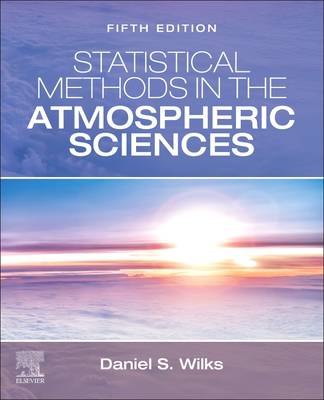
Statistical Methods in the Atmospheric Sciences, Fifth Edition provides a structured exploration of the statistical techniques essential for analyzing atmospheric data. The book begins with foundational concepts in probability, setting the stage for more advanced topics. It then covers univariate statistics, including empirical distributions, parametric probability models, and both frequentist and Bayesian inference methods, offering tools for rigorous data analysis and interpretation. The text also addresses statistical forecasting and ensemble forecasting, along with methods for verifying forecast accuracy. In addition, time series analysis is explored in detail, enabling readers to understand temporal dependencies in atmospheric data. The book advances into multivariate statistics, presenting matrix algebra and random matrices as mathematical foundations. It discusses the multivariate normal distribution, principal component analysis (EOF), and multivariate analysis of vector pairs to handle complex, multidimensional atmospheric datasets. Techniques for discrimination, classification, and cluster analysis are also examined, providing methods for categorizing and interpreting atmospheric patterns. Supplementary materials include example data sets, probability tables, and a glossary of symbols and acronyms, along with answers to exercises that reinforce learning.
Specificaties
Betrokkenen
- Auteur(s):
- Uitgeverij:
Inhoud
- Aantal bladzijden:
- 818
- Taal:
- Engels
Eigenschappen
- Productcode (EAN):
- 9780443490026
- Verschijningsdatum:
- 27/03/2026
- Uitvoering:
- Paperback
- Formaat:
- Trade paperback (VS)
- Afmetingen:
- 193 mm x 234 mm
- Gewicht:
- 1646 g


Alleen bij Standaard Boekhandel
+ 432 punten op je klantenkaart van Standaard Boekhandel
Cadeau

AANGERADEN


Beoordelingen
We publiceren alleen reviews die voldoen aan de voorwaarden voor reviews. Bekijk onze voorwaarden voor reviews.