


- Afhalen na 1 uur in een winkel met voorraad
- Gratis thuislevering in België vanaf € 30
- Ruim aanbod met 7 miljoen producten
- Afhalen na 1 uur in een winkel met voorraad
- Gratis thuislevering in België vanaf € 30
- Ruim aanbod met 7 miljoen producten





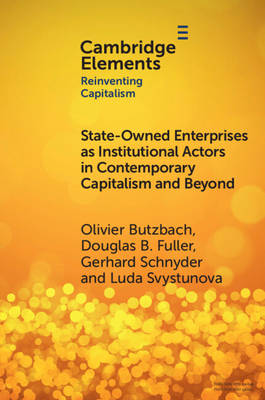
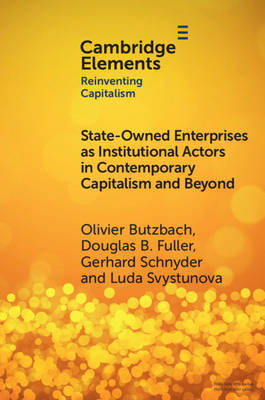
State-Owned Enterprises as Institutional Actors in Contemporary Capitalism and Beyond
Olivier Butzbach, Douglas B Fuller, Gerhard Schnyder
€ 36,45
+ 72 punten
Uitvoering
Eenvoudig bestellen
Veilig betalen


Gratis thuislevering vanaf € 30 (via bpost)
Gratis levering in je Standaard Boekhandel
Omschrijving
This Element qualifies the common understanding of State-Owned Enterprises (SOEs) as mere instruments of the state and instead conceive of them as economic actors in their own right. Specifically, SOE top management teams have leeway to diverge from goals that the state they are owned by pursues. Through 'institutional work' they can even actively shape the institutional framework in which they are embedded. However, the extent of SOE top management teams' leeway for agency is determined by macro- (country), meso- (State-SOE governance system), and industry-level factors. These factors, in turn, vary from country to country and over time. In other words, SOE agency is 'embedded agency.' Combining institutional work and historical institutionalism analytic lenses, this Element presents a multilevel model to understand embedded agency of top management teams of SOEs in contemporary capitalism. The model adds an important element to our understanding of the 'new state capitalism.'
Specificaties
Betrokkenen
- Auteur(s):
- Uitgeverij:
Inhoud
- Aantal bladzijden:
- 94
- Taal:
- Engels
- Reeks:
Eigenschappen
- Productcode (EAN):
- 9781009474122
- Verschijningsdatum:
- 6/02/2025
- Uitvoering:
- Paperback
- Formaat:
- Trade paperback (VS)
- Afmetingen:
- 152 mm x 229 mm
- Gewicht:
- 136 g


Alleen bij Standaard Boekhandel
+ 72 punten op je klantenkaart van Standaard Boekhandel
CADEAU

AANGERADEN


Beoordelingen
We publiceren alleen reviews die voldoen aan de voorwaarden voor reviews. Bekijk onze voorwaarden voor reviews.