



Bedankt voor het vertrouwen het afgelopen jaar! Om jou te bedanken bieden we GRATIS verzending (in België) aan op alles gedurende de hele maand januari.
- Afhalen na 1 uur in een winkel met voorraad
- In januari gratis thuislevering in België
- Ruim aanbod met 7 miljoen producten
Bedankt voor het vertrouwen het afgelopen jaar! Om jou te bedanken bieden we GRATIS verzending (in België) aan op alles gedurende de hele maand januari.
- Afhalen na 1 uur in een winkel met voorraad
- In januari gratis thuislevering in België
- Ruim aanbod met 7 miljoen producten





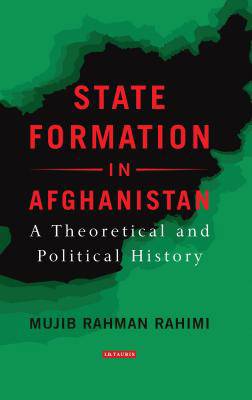
State Formation in Afghanistan A Theoretical and Political History
A Theoretical and Political History
Mujib Rahman Rahimi
€ 271,45
+ 542 punten
Omschrijving
The creation of Afghanistan in 1880, following the Second Anglo-Afghan War, gave an empowering voice to the Pashtun people, the largest ethnic group in a diverse country. In order to distil the narrative of the state's formation and early years, a Pashtun-centric version of history dominated Afghan history and the political process from 1880 to the 1970s. Alternative discourses made no appearance in the fledgling state which lacked the scholarly institutions and any sense of recognition for history, thus providing no alternatives to the narratives produced by the British, whose quasi-colonial influence in the region was supreme. Since 1970, the ongoing crises in Afghanistan have opened the space for non-Pashtuns, including Tajiks, Hazaras, and Uzbeks, to form new definitions of identity, challenge the official discourse and call for the re-writing of the long-established narrative. At the same time, the Pashtun camp, through their privileged position in the political settlements of 2001, have attempted to confront the desire for change in historical perceptions by re-emphasising the Pashtun domination of Afghan history.
This crisis of hegemony has led to a deep antagonism between the Pashtun and non-Pashtun perspectives of Afghan history and threatens the stability of political process in the country.
This crisis of hegemony has led to a deep antagonism between the Pashtun and non-Pashtun perspectives of Afghan history and threatens the stability of political process in the country.
Specificaties
Betrokkenen
- Auteur(s):
- Uitgeverij:
Inhoud
- Aantal bladzijden:
- 352
- Taal:
- Engels
- Reeks:
Eigenschappen
- Productcode (EAN):
- 9781784539498
- Verschijningsdatum:
- 30/10/2017
- Uitvoering:
- Hardcover
- Formaat:
- Genaaid
- Afmetingen:
- 140 mm x 218 mm
- Gewicht:
- 589 g


Alleen bij Standaard Boekhandel
+ 542 punten op je klantenkaart van Standaard Boekhandel
SOLDEN


Beoordelingen
We publiceren alleen reviews die voldoen aan de voorwaarden voor reviews. Bekijk onze voorwaarden voor reviews.