


- Afhalen na 1 uur in een winkel met voorraad
- Gratis thuislevering in België vanaf € 30
- Ruim aanbod met 7 miljoen producten
- Afhalen na 1 uur in een winkel met voorraad
- Gratis thuislevering in België vanaf € 30
- Ruim aanbod met 7 miljoen producten





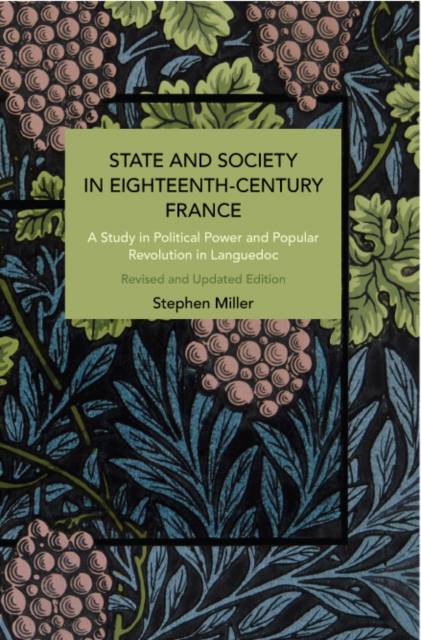
State and Society in Eighteenth-Century France
A Study in Political Power and Popular Revolution in Languedoc
Stephen Miller
€ 40,45
+ 80 punten
Omschrijving
In contrast to the traditional Marxist interpretation of emerging capitalism and its revolutionary bourgeoisie, State and Society in Eighteenth-Century France shows that commodified labor, fundamental to the existence of a capitalist bourgeoisie, did not take shape in eighteenth-century France. Through the revolutionary period, the mass of the population consisted of peasants and artisans in possession of land and workshops, all embedded in autonomous communities. The old regime bourgeoisie and nobility thus developed within the absolutist state in order to have the political means to impose feudal forms of exploitation on the people. These class relations, and not those offered in the traditional interpretation, gave rise to the crisis of 1789 and the revolutionary conflicts of the 1790s
Specificaties
Betrokkenen
- Auteur(s):
- Uitgeverij:
Inhoud
- Aantal bladzijden:
- 256
- Taal:
- Engels
- Reeks:
Eigenschappen
- Productcode (EAN):
- 9781642599961
- Verschijningsdatum:
- 14/11/2023
- Uitvoering:
- Paperback
- Formaat:
- Trade paperback (VS)
- Afmetingen:
- 152 mm x 229 mm
- Gewicht:
- 349 g


Alleen bij Standaard Boekhandel
+ 80 punten op je klantenkaart van Standaard Boekhandel
Cadeau

AANGERADEN


Beoordelingen
We publiceren alleen reviews die voldoen aan de voorwaarden voor reviews. Bekijk onze voorwaarden voor reviews.