


- Afhalen na 1 uur in een winkel met voorraad
- Gratis thuislevering in België vanaf € 30
- Ruim aanbod met 7 miljoen producten
- Afhalen na 1 uur in een winkel met voorraad
- Gratis thuislevering in België vanaf € 30
- Ruim aanbod met 7 miljoen producten





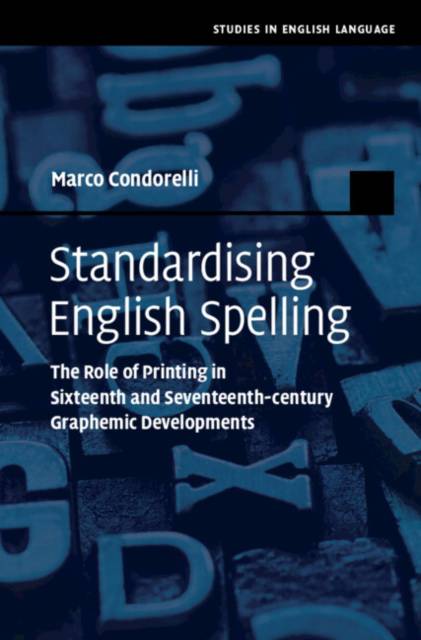
Standardising English Spelling
The Role of Printing in Sixteenth and Seventeenth-century Graphemic Developments
Marco Condorelli
€ 209,45
+ 418 punten
Eenvoudig bestellen
Veilig betalen


Gratis thuislevering vanaf € 30 (via bpost)
Gratis levering in je Standaard Boekhandel
Omschrijving
The standardisation of English spelling that resulted from the advent of printing is one of the most fascinating aspects of the history of English. This pioneering book explores new avenues of investigation into spelling development by looking at the Early Modern English period, when irregular features across graphemes became standardised. It traces the development of the English spelling system through a number of 'competing' standards, raising questions about the meaning of 'standardisation'. It introduces a new model for the analysis of large-scale graphemic developments from a diachronic perspective, and provides a new empirical method geared specifically to the study of spelling standardisation between the sixteenth and seventeenth centuries. The method is applied to four interconnected case studies, focusing on the standardisation of positional spellings, i and y, etymological spelling and vowel diacritic spelling. This book is essential reading for researchers of writing systems and the history of English.
Specificaties
Betrokkenen
- Auteur(s):
- Uitgeverij:
Inhoud
- Aantal bladzijden:
- 278
- Taal:
- Engels
- Reeks:
Eigenschappen
- Productcode (EAN):
- 9781009098144
- Verschijningsdatum:
- 7/04/2022
- Uitvoering:
- Hardcover
- Formaat:
- Genaaid
- Afmetingen:
- 152 mm x 229 mm
- Gewicht:
- 539 g



Alleen bij Standaard Boekhandel
+ 418 punten op je klantenkaart van Standaard Boekhandel
CADEAU

AANGERADEN


Beoordelingen
We publiceren alleen reviews die voldoen aan de voorwaarden voor reviews. Bekijk onze voorwaarden voor reviews.