



Je cadeautjes zeker op tijd in huis hebben voor de feestdagen? Kom langs in onze winkels en vind het perfecte geschenk!
- Afhalen na 1 uur in een winkel met voorraad
- Gratis thuislevering in België vanaf € 30
- Ruim aanbod met 7 miljoen producten
Je cadeautjes zeker op tijd in huis hebben voor de feestdagen? Kom langs in onze winkels en vind het perfecte geschenk!
- Afhalen na 1 uur in een winkel met voorraad
- Gratis thuislevering in België vanaf € 30
- Ruim aanbod met 7 miljoen producten





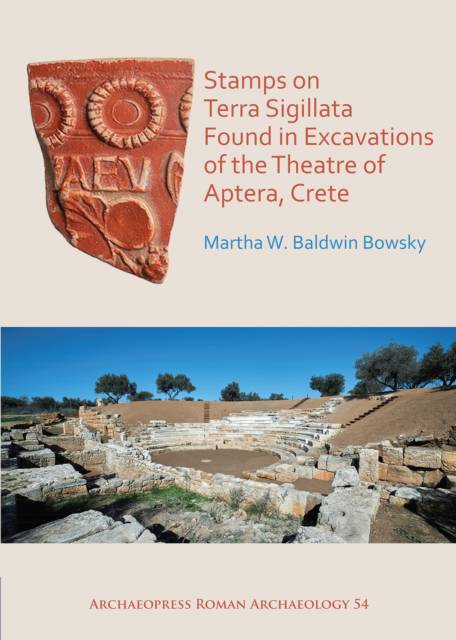
Stamps on Terra Sigillata Found in Excavations of the Theatre of Aptera
Martha W Baldwin Bowsky
€ 51,45
+ 102 punten
Omschrijving
Stamps on Terra Sigillata Found in Excavations of the Theatre of Aptera, Crete presents a group of stamped fragments of Italian and eastern sigillata found in excavations of the theatre of Aptera (Crete). A total of 258 stamped sherds have been discovered and identified: 28 already published by the author and another 230 included here. Aptera now yields more stamped fragments of terra sigillata than any other Cretan city to date, including Knossos. The sigillata stamps from the theatre of Aptera can be analysed so as to address a series of fundamental questions. Three of these constitute traditional uses of the evidence available from an analysis of terra sigillata: which potters supplied the theatre of Aptera and its environs; where these potters were active; when these potters were active and therefore what production centres supplied the theatre and its area over time. Two questions go further, in an effort to take advantage of this kind of material's ability to testify to patterns of contact and exchange, as well as to details of life within the Roman imperial system: what distribution patterns might have brought terra sigillata to the theatre and its vicinity; and whether we can suggest how terra sigillata was consumed in Aptera's theatre and its environs. Aptera's theatre was a venue not only for performances but also for drinking, eating, and serving by the theatre-goers, spectators, actors and other performers. These activities took place during a period of prosperity for Roman Aptera in the first and second centuries, a period that coincides nicely with the production and distribution of terra sigillata. The people of Aptera and the surrounding area took full advantage of Crete's strategic position amid crossroads of transit and exchange as well as integration into the Roman economy, to display their prosperity and status in public and in private.
Specificaties
Betrokkenen
- Auteur(s):
- Uitgeverij:
Inhoud
- Aantal bladzijden:
- 214
- Taal:
- Engels
- Reeks:
Eigenschappen
- Productcode (EAN):
- 9781789692389
- Verschijningsdatum:
- 31/07/2019
- Uitvoering:
- Paperback
- Formaat:
- Trade paperback (VS)
- Afmetingen:
- 173 mm x 259 mm
- Gewicht:
- 430 g


Alleen bij Standaard Boekhandel
+ 102 punten op je klantenkaart van Standaard Boekhandel
CADEAU


Beoordelingen
We publiceren alleen reviews die voldoen aan de voorwaarden voor reviews. Bekijk onze voorwaarden voor reviews.