


- Afhalen na 1 uur in een winkel met voorraad
- Gratis thuislevering in België vanaf € 30
- Ruim aanbod met 7 miljoen producten
- Afhalen na 1 uur in een winkel met voorraad
- Gratis thuislevering in België vanaf € 30
- Ruim aanbod met 7 miljoen producten





€ 160,45
+ 320 punten
Omschrijving
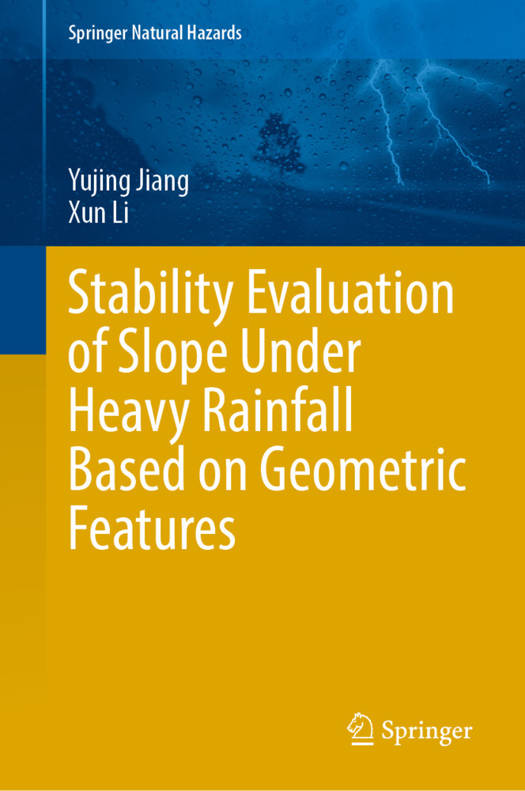
This book presents a systematic framework for evaluating slope stability under short-term heavy rainfall by integrating numerical simulation with GIS-based analysis. It covers several key aspects, including the simulation of heterogeneous weathered soils in FLAC3D and experimental approaches for determining the hydraulic properties of unsaturated soils. In addition, it addresses unsaturated seepage and slope stability analysis under rainfall conditions using FLAC3D, as well as GIS-based assessment of rainfall-induced landslide susceptibility. Unlike conventional GIS-based regional stability assessment methods that rely on simplified infiltration models, such as the Green Ampt (GA) model or the one-dimensional Richards equation, this book introduces a novel geometric indicator, the Slope Surface Roughness Coefficient (SSRC), to quantitatively characterize the influence of three-dimensional slope geometry on stability. The book is organized as follows. Chapter 1 reviews recent advances in slope stability analysis under rainfall conditions. Chapter 2 presents physical model tests of rainfall-induced slope failure. Chapter 3 introduces the theoretical framework and governing equations. Chapters 4 and 5 provide numerical simulations of rainfall-triggered slope failures in the Kyushu region of Japan. Chapters 6 and 7 describe a methodology for regional slope stability assessment under heavy rainfall based on the SSRC of three-dimensional (3D) slopes. This book is intended for geotechnical engineers engaged in disaster prevention and mitigation under heavy rainfall, as well as researchers interested in combining numerical modeling and GIS techniques for geotechnical engineering applications.
Specificaties
Betrokkenen
- Auteur(s):
- Uitgeverij:
Inhoud
- Taal:
- Engels
- Reeks:
Eigenschappen
- Productcode (EAN):
- 9789819586554
- Verschijningsdatum:
- 11/08/2026
- Uitvoering:
- Hardcover
- Afmetingen:
- 155 mm x 235 mm


Alleen bij Standaard Boekhandel
+ 320 punten op je klantenkaart van Standaard Boekhandel
Wedstrijd


Beoordelingen
We publiceren alleen reviews die voldoen aan de voorwaarden voor reviews. Bekijk onze voorwaarden voor reviews.