


- Afhalen na 1 uur in een winkel met voorraad
- Gratis thuislevering in België vanaf € 30
- Ruim aanbod met 7 miljoen producten
- Afhalen na 1 uur in een winkel met voorraad
- Gratis thuislevering in België vanaf € 30
- Ruim aanbod met 7 miljoen producten





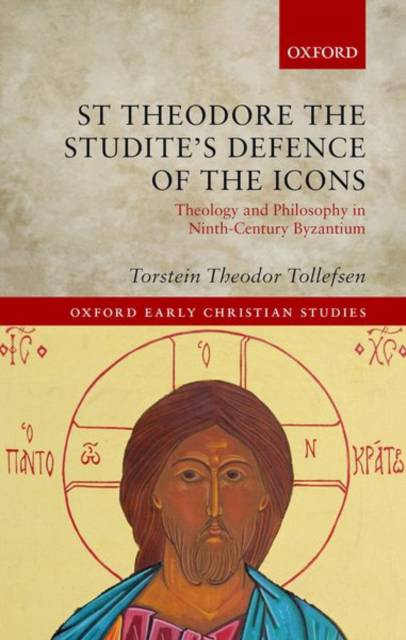
St Theodore the Studite's Defence of the Icons
Theology and Philosophy in Ninth-Century Byzantium
Torstein Theodor Tollefsen
€ 193,45
+ 386 punten
Eenvoudig bestellen
Veilig betalen


Gratis thuislevering vanaf € 30 (via bpost)
Gratis levering in je Standaard Boekhandel
Omschrijving
St Theodore the Studite's Defence of the Icons provides an investigation of the icon-theology of St Theodore the Studite, mainly as it is presented in his three refutations of the iconoclasts, the Antirrhetici tres adversus iconomachos. Torstein Theodor Tollefsen explores Theodore's 'philosophy of images', namely his doctrine of images and his arguments that justify the legitimacy of images in general and of Christ in particular. Tollefsen offers a historical, theological, and philosophical exploration of Theodore's doctrine of images and his arguments justifying the legitimacy of images and of Christ. In addition to the main elements of Theodore's defence of the icon, like the Christological issue, the relation between image and prototype, the question of veneration, his explanation of why we may say of an image that 'this is Christ', and his innovative thinking on the representative character of the icon, the book has an introduction that places Theodore in the history of Byzantine philosophy: He has some knowledge of traditional logical topics and is able to utilize argumentative forms in countering his iconoclast opponents. The volume also provides an appendix which shows that the making of images is somehow natural given the character of Christianity as a religion.
Specificaties
Betrokkenen
- Auteur(s):
- Uitgeverij:
Inhoud
- Aantal bladzijden:
- 208
- Taal:
- Engels
- Reeks:
Eigenschappen
- Productcode (EAN):
- 9780198816775
- Verschijningsdatum:
- 17/07/2018
- Uitvoering:
- Hardcover
- Formaat:
- Genaaid
- Afmetingen:
- 145 mm x 218 mm
- Gewicht:
- 362 g


Alleen bij Standaard Boekhandel
+ 386 punten op je klantenkaart van Standaard Boekhandel
CADEAU

AANGERADEN


Beoordelingen
We publiceren alleen reviews die voldoen aan de voorwaarden voor reviews. Bekijk onze voorwaarden voor reviews.